


In the quiet villages of Bumdeling gewog, the aroma of freshly cooked millet dough once defined daily life. For generations, millet flour formed the heart of every meal, symbolising both nourishment and cultural identity. Today, however, this age-old dietary practice is gradually fading as new habits and modern food choices reshape the region’s kitchens.
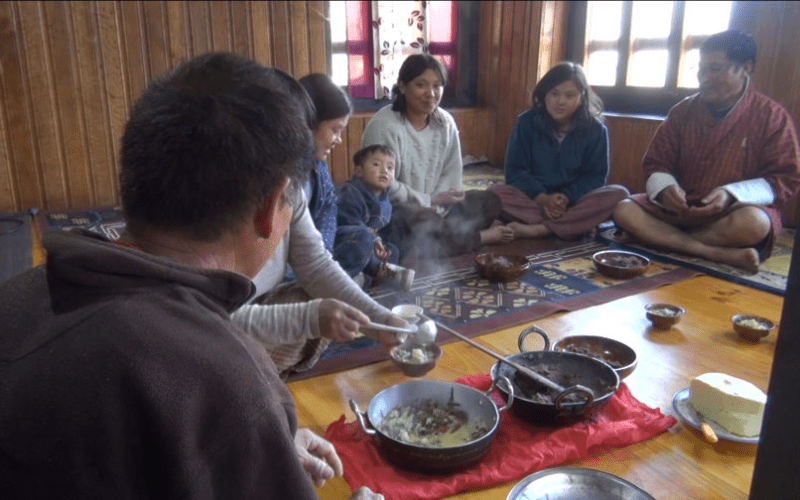
In Tarphel Chiwog, one family continues to prepare the traditional dish in the way their ancestors did. The process is simple yet deeply rooted in local knowledge: flour is stirred into boiling water and mixed patiently until it becomes a smooth, well-cooked dough. Served piping hot, the meal is said to keep people energised and full for long hours. A variety of curries usually accompany it, but locals say nothing complements it better than Phrum Koo — red chilli blended with dried cheese — a pairing cherished for its bold flavour.
Despite its nutritional value and cultural significance, millet flour is no longer a common sight on many dining tables. Residents say the shift began as imported rice and packaged foods became easier to obtain, gradually replacing traditional staples. Changing farming practices have also led to a steady decline in millet cultivation across the district.
Phurpa Tshering from Cheng village believes schools could play a key role in reviving interest among younger generations. He suggests that including millet flour meals in school programmes, even once a week, would encourage farmers to continue growing the crop while helping children develop a connection with their heritage. “Schools are where our future generations learn what to preserve,” he said.
Older residents recall a time when millet fields stretched across the landscape. Drupchu Zangmo remembers relying entirely on millet for daily meals. “In the past, our fields were full of it,” she said. “We ate millet flour morning, noon and night because it was what we grew ourselves.”
Younger voices reveal a different perspective. Tshering Yangzom admits that while she admires elders enjoying the dish, she feels less inclined to eat it, having grown up with rice as the main staple. Her view reflects a wider generational shift that challenges efforts to sustain traditional foodways.
Local authorities, however, are working to keep the legacy alive. Under the One Gewog One Product initiative, millet has been recognised as Bumdeling’s signature product. A processing unit now operates in the gewog, and millet-based foods are prominently featured during festivals and public events to raise awareness.
Bumdeling remains the highest producer of finger millet in Trashi Yangtse, and community leaders hope these initiatives will inspire renewed appreciation for the crop. While the future of the millet-based diet remains uncertain, many believe that with continued support and education, the tradition can endure — preserving not only a nutritious food but also a unique cultural identity.


