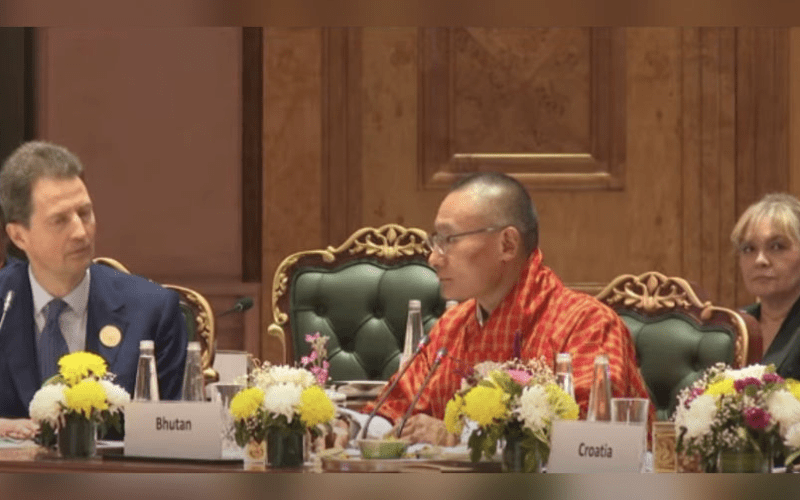
At the India AI Impact Summit 2026, Bhutan’s Prime Minister Tshering Tobgay outlined an ambitious vision for the future of artificial intelligence, one grounded in sustainability, collaboration, and ethical responsibility. Speaking before a gathering of policymakers, technology leaders, and industry experts, Tobgay emphasized that the rapid expansion of AI must be guided by values that prioritize humanity alongside innovation.
A central theme of his address was the growing energy demand created by advanced computing systems. The Prime Minister noted that clean and reliable power sources will be essential to sustain the next generation of AI infrastructure. He pointed to potential partnerships with major energy providers to help ensure that the development of artificial intelligence does not come at the expense of environmental stability.
Highlighting Bhutan’s long-term strategy, Tobgay introduced the Gelephu Mindfulness City as a future-ready hub designed to integrate technology with ecological balance. The project aims to attract high-performance computing industries while maintaining strict sustainability principles, positioning the city as a model for responsible digital growth. According to him, the goal is to create a space where innovation and environmental stewardship evolve together rather than in conflict.
Throughout the summit, the Prime Minister stressed that the true measure of technological progress lies not only in economic gains or technical breakthroughs but in its ability to create a more equitable and compassionate society. He urged governments and corporations to think beyond short-term advantages and consider how AI can reduce inequalities and improve the quality of life.
The India AI Impact Summit served as a platform for dialogue on governance, ethics and the societal consequences of emerging technologies. Participants debated regulatory frameworks, workforce transformation and the need for international cooperation as artificial intelligence reshapes global industries.
As discussions concluded, Tobgay’s message resonated with many attendees: the future of AI will depend not just on faster processors or larger datasets, but on whether nations can work together to ensure that technological advancement aligns with shared human values.