


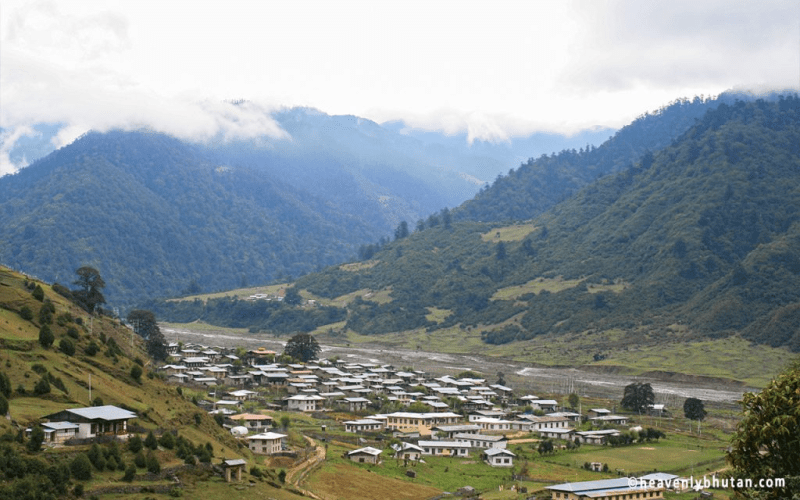
High in the eastern Himalayas, the remote settlement of Sakteng in Bhutan’s Trashigang district is witnessing a transformation that few residents could have imagined just over a decade ago. Once isolated for much of the year, the gewog has steadily embraced modernity following the arrival of electricity in 2010 and road connectivity five years later.
For generations, life in Sakteng revolved around yak herding, rugged mountain trails, and tightly preserved customs. Homes were traditionally built using local materials, and villagers relied heavily on barter and subsistence living. Today, concrete structures, modern roofing, and improved public infrastructure are becoming common sights across the highland community.
The construction of motorable roads in 2015 marked a turning point for residents. What once took days of travel on foot or horseback can now be completed in a matter of hours. Farmers and herders are able to transport dairy products and other goods to nearby markets more efficiently and at far lower costs, creating new economic opportunities for families.
Electricity has also reshaped everyday life. Households now have access to lighting, television, and communication technologies that were previously unimaginable in the remote village. With improved connectivity, younger generations are increasingly exposed to the outside world while remaining rooted in their cultural identity.
The social fabric of Sakteng is evolving alongside these developments. Traditional attire, once worn daily, is now more commonly reserved for festivals, ceremonies, and official gewog meetings. Customs that were once widely accepted, including polygamy, are gradually fading as education and changing social values influence the community.
Education, in particular, has become one of the most visible signs of progress. In earlier times, children often spent their days tending yaks and supporting household livelihoods. Today, many young people attend schools and aspire to careers beyond pastoral life, reflecting a broader shift in opportunities and ambitions.
Residents such as Leki Yangzom say the changes have brought significant improvements to their quality of life. Easier access to healthcare, markets, education, and public services has reduced many of the hardships that once defined life in the isolated mountain settlement.
Despite the rapid modernization, Sakteng continues to hold onto its unique cultural heritage and traditions. For many residents, the challenge now lies in balancing development with the preservation of a way of life that has long distinguished the community from the rest of the country.


