


Bhutan has formally resumed negotiations to join the World Trade Organisation, ending an 18-year pause in a process that began more than two decades ago.
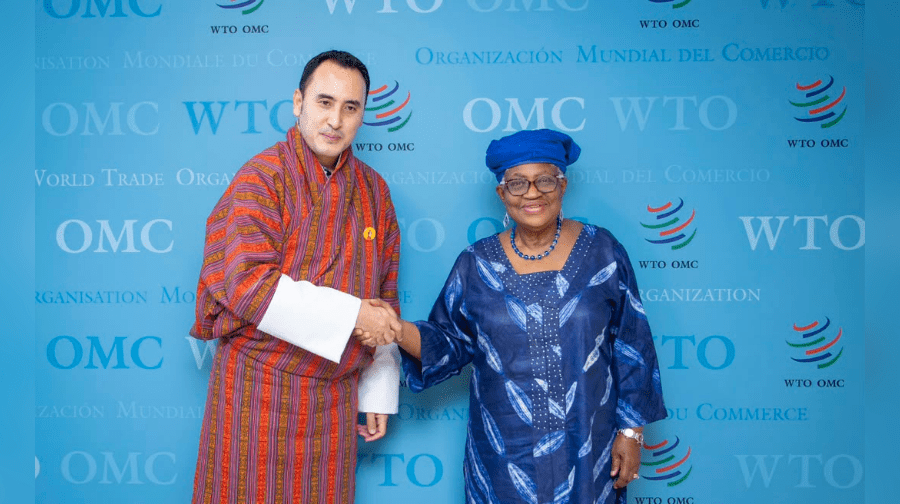
A Bhutanese delegation led by Minister for Industry, Commerce and Employment Namgyal Dorji attended the fifth meeting of the Working Party on Bhutan’s accession in Geneva, Switzerland, on Thursday. The delegation included the ministry’s secretary, senior representatives from Gelephu Mindfulness City, officials from the Department of Trade and representatives of other government agencies involved in the accession process.
The meeting marked Bhutan’s return to formal WTO negotiations for the first time since talks stalled in 2008.
Describing the development as a major milestone, Dorji said the long pause had allowed the country to strengthen its institutions, update its laws and prepare more thoroughly for the responsibilities of WTO membership.
During the intervening years, Bhutan introduced reforms aimed at improving the trade and investment environment, modernising legislation, strengthening public institutions and diversifying the economy, the minister told WTO members.
Bhutan first applied to join the multilateral trading body in 1999, when a Working Party was established to examine its application. Four rounds of formal negotiations were held between 2003 and 2008, but the process subsequently lost momentum.
The cautious pace reflected concerns over how greater integration with global markets could affect Bhutan’s small economy, local industries and distinctive cultural and environmental priorities.
The Cabinet approved the resumption of accession negotiations in June 2025 after extensive preparations by government agencies. Ahead of the Geneva meeting, Bhutan updated and circulated 19 accession-related documents covering its trade regime, laws, regulations, institutions and proposed commitments on market access.
The Working Party is responsible for assessing whether Bhutan’s trade-related laws and policies comply with WTO rules. Alongside the multilateral process, Bhutan must hold separate negotiations with interested WTO members on access to its markets for goods and services.
Negotiations on goods will determine the maximum tariff rates Bhutan may impose on imported products. Talks on services will establish which sectors may be opened to foreign providers and the conditions under which they may operate.
At the meeting, the Bhutanese delegation drew attention to the country’s structural constraints as a small, landlocked developing economy that recently graduated from the United Nations’ Least Developed Country category.
Dorji urged WTO members to ensure that their demands remain proportionate to Bhutan’s level of development and institutional capacity.
The government has said it will seek an accession agreement that supports national priorities while creating a more transparent and predictable business environment.
According to Dorji, WTO membership could strengthen investor confidence, support private-sector expansion and create wider opportunities for trade, employment and economic growth. The government, he added, remains committed to securing an outcome that is practical, balanced and supportive of Bhutan’s long-term development.
Trade experts say WTO membership could provide Bhutanese exporters with more predictable access to overseas markets and offer businesses greater certainty through internationally recognised trade rules. It could also improve the country’s ability to attract investment and participate in regional and global supply chains.
However, accession may also require difficult adjustments. Domestic laws and policies would have to be aligned with WTO obligations, while local businesses could face stronger competition from foreign suppliers. Government institutions may also incur additional costs in implementing and monitoring new commitments.
Bhutan has set a provisional target of becoming a WTO member by the end of 2028. The timeline will depend on the pace of negotiations, the completion of domestic reforms and agreement among WTO members on the final terms of accession.
The next phase is expected to involve further questions from WTO members, detailed market-access negotiations on goods and services, possible amendments to national laws and preparation of a final accession package.
On the sidelines of the Working Party meeting, the Bhutanese delegation held discussions with senior officials from several international organisations. These included the WTO Director-General, the Director-General of the World Intellectual Property Organisation and the Acting Secretary-General of the United Nations Conference on Trade and Development.
The delegation also met Austria’s ambassador and permanent representative to the WTO, who chairs Bhutan’s accession Working Party. Bilateral negotiations were held with interested WTO members to advance discussions on market access.
As the process moves forward, the debate within Bhutan is likely to focus not only on the timing of membership but also on the terms under which the country joins.
The central issue will be whether Bhutan can secure commitments that expand opportunities for trade, investment and employment without undermining domestic industries, institutional capacity and broader national development priorities.


