


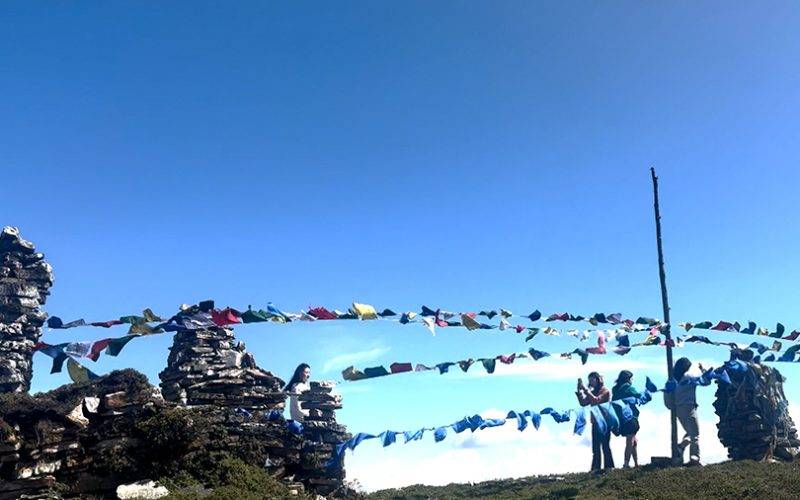
A few years ago, Pangkala in Paro was known mainly to nearby villagers and a small number of pilgrims travelling to Tseybum Ney. Today, on weekends, hundreds of young Bhutanese and foreign visitors make the climb, many carrying cameras, phones and backpacks.
The reason often begins with something remarkably simple: a scroll.
A short video shows a man running across mountain ridges covered in purple, white and yellow flowers. A photograph captures a viewpoint above the clouds. A travel vlog follows the climb to a place many viewers had never heard of.
For a growing number of young Bhutanese, that is enough to lace up their hiking boots and head for the mountains.
Pangkala is one of the clearest examples of how social media is transforming the way Bhutanese people discover and experience their own country. Videos and photographs shared on TikTok, YouTube and Facebook have brought the trail into public view, turning a once little-known route into one of Paro’s trending hiking destinations.
“My friends and I decided to hike to Pangkala because we’ve been seeing a lot of videos and photos of the place on social media. The scenery looked beautiful. Unfortunately, it started raining today, so we couldn’t take good pictures. We’re planning to come back next year,” said hiker Singye Dema.
Her experience captures both the appeal and the character of this new hiking culture. The destination matters, but so does the desire to photograph it, share it and return with a better image.
That is not necessarily a bad thing.
Social media is often criticised for keeping young people indoors and attached to their screens. In this case, however, the screen is encouraging them to step outside. A video watched at home becomes the reason for an early morning drive, a difficult climb, time spent with friends and several hours away from the pressures of daily life.
“We decided to visit Pangkala after watching a video uploaded by a YouTuber called Bhutanese Dreamer. The video inspired us to make the hike,” said Ugyen Penjor.
For many hikers, reaching the summit is only one part of the experience. The journey offers fresh mountain air, forest trails, physical exercise, friendship and a welcome break from busy routines. It also creates an opportunity for young Bhutanese to encounter landscapes that may exist within their own country but remain unfamiliar to them.
The change at Pangkala has been dramatic.
According to the caretaker of Ugyen Guru Goenzin Dratshang, where the trail begins, visitor numbers have risen sharply within just one year.
“In the past, very few people hiked to Pangkala. Only a handful of villagers would go there, either to relax between farm work or to visit Tseybum Ney, which is on the way to Pangkala. This is the first year we’ve seen as many as 500 to 600 people hiking there in a single day,” said Gyembo Dorji, Uzin of Ugyen Guru Goenzin Dratshang.
Such numbers show the extraordinary power of digital visibility. A place does not need a major tourism campaign to become popular. One striking video, widely shared, can introduce a remote trail to thousands of people almost overnight.
Pangkala is not an isolated case. Across Bhutan, hikers and content creators are bringing lesser-known forests, mountain routes, sacred sites and hidden viewpoints onto phone screens. Each post encourages others to travel beyond familiar destinations, gradually building a larger community of outdoor enthusiasts.
“What motivates me to go hiking is, first of all, to stay physically fit and also to explore the beautiful nature our country has to offer,” said frequent hiker Sonam Tobgay. “I think the growing interest among young people is a very positive and healthy trend. Every youth should try hiking and experience the beauty of our natural surroundings. It is becoming a lifestyle that encourages adventure, friendship and a deeper connection with Bhutan’s natural heritage.”
He is right to describe the trend as positive. At a time when sedentary lifestyles, excessive screen use and social isolation are growing concerns, hiking offers something valuable: movement, companionship, curiosity and contact with nature.
It can also strengthen a sense of belonging. Bhutanese people often speak proudly of the country’s mountains, forests and environmental heritage. Hiking allows that pride to become personal. A landscape is no longer merely something seen in a tourism advertisement or admired from a road. It becomes a place one has walked through, struggled to reach and remembered.
But popularity also brings responsibility.
A trail that once received a few visitors may not be prepared for hundreds arriving in a single day. More hikers can mean more litter, soil erosion, damage to vegetation, noise, pressure on sacred places and disturbance to wildlife. The very beauty that attracts visitors can be damaged by unmanaged attention.
This is where social media must do more than promote destinations. Hikers and content creators should also promote responsible behaviour.
Videos should remind viewers to stay on designated trails, carry their waste home, avoid disturbing animals, respect religious sites and refrain from picking flowers or consuming wild mushrooms and unfamiliar plants. Those who make a place popular have some responsibility for shaping how their audiences behave once they arrive.
Relevant agencies and local communities must also prepare for the effects of sudden popularity. Basic signs, waste-management arrangements, safety information and clear trail markings may become necessary at heavily visited locations. Visitor numbers should be monitored before environmental damage becomes visible and difficult to reverse.
The aim should not be to discourage people from hiking. It should be to ensure that exploration does not become exploitation.
Social media has given Bhutan’s younger generation a new way of looking at the country. It has made remote places feel reachable and has transformed hiking from an occasional activity into a growing lifestyle. That is worth celebrating.
But the success of this movement should not be measured only by views, likes, photographs or visitor numbers. It should also be measured by whether these trails remain clean, peaceful and alive for those who come after us.
For now, one shared video is doing far more than collecting likes. It is encouraging a new generation to step outside, explore its own country and discover that some of Bhutan’s finest views are reached one trail at a time.
The challenge is to make sure those trails remain worth walking.


