


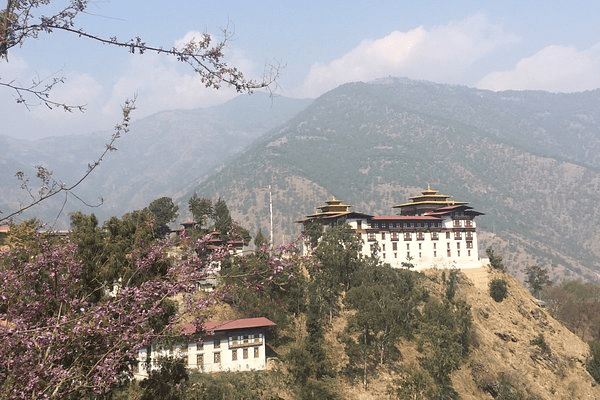
In the remote villages of Gongdu Gewog, a language passed down for generations is slowly losing its place in everyday life.
Gongduk, spoken by a small community in southern Monggar, is increasingly being replaced by Tshangla, Khengkha, Dzongkha and, among younger people, English and Hindi. Residents fear that the language could disappear as elderly speakers pass away and younger generations move elsewhere or show little interest in learning it.
The decline is especially visible in Dagsa, one of the six villages where Gongduk is spoken. Once commonly used within homes and the wider community, the language is now rarely heard in conversations involving children and young adults.
Residents say social media has accelerated the change. Young people spend much of their time watching content on YouTube and other platforms, where dominant regional and international languages leave little space for Gongduk.
Migration has added to the problem. Families have moved to towns in search of employment, education and better access to services, leaving fewer people in the villages where the language has traditionally survived.
Gongdu Gewog’s registered population declined from more than 1,200 in 2017 to just over 1,000 in 2024. People aged 65 and above now form the largest age group in the gewog. The gewog also recorded 60 gungtongs, or empty households, in 2024.
“Our children do not live here, and we mostly communicate in Dzongkha and Tshangla,” said Dagsa resident Kencho Dorji. “Besides, only a few young people are interested in learning the dialect.”
For elderly residents, the loss of Gongduk is not simply the disappearance of words. It is the erosion of a cultural identity shaped through generations.
“Now, our mother tongue is disappearing with our generation,” said Kezang Wangdi, another resident of Dagsa. “The younger generation is no longer interested in learning it. I always tell my children that if they do not try to learn the dialect, it could become extinct by their children’s time. I remind them that it is our identity.”
Phurba Lhamo, also from Dagsa, said preserving the language should become a responsibility shared by the community’s youth.
“It is disheartening to see our dialect decline,” she said. “I tell our youngsters that it is their responsibility to preserve and promote Gongduk.”
The language is spoken only in the villages of Bala, Dagsa, Pangthang, Damkhar, Pam and Yangbari. Although it has existed for generations, Gongduk was formally documented by linguists only in 1991 and remains one of Bhutan’s least studied languages.
Its grammar and vocabulary differ significantly from Tshangla and Khengkha, which are spoken in neighbouring communities. However, the limited research and absence of standard learning materials have made efforts to teach and preserve it difficult.
A new study may provide the language with some institutional support. The Centre for Bhutan and GNH Studies has received government approval to conduct research on Gongduk and develop a grammar of the language.
Gongdu Gup Tshewang Tobgyal said the gewog administration is assisting the researchers.
“We are supporting them in every possible way because the initiative is important for preserving the dialect,” he said.
The research could create an important written record of Gongduk. But residents acknowledge that documentation alone cannot ensure its survival. A language remains alive only when it is spoken at home, passed from parents to children and used in ordinary community life.
In Dagsa, seven-year-old Sangay Tenzin still attempts to speak Gongduk. He hesitates and struggles with some words, but continues trying.
His uncertain voice offers a small measure of hope. A grammar book may preserve Gongduk on paper, but its future will ultimately depend on whether children like Sangay continue to speak it.


