


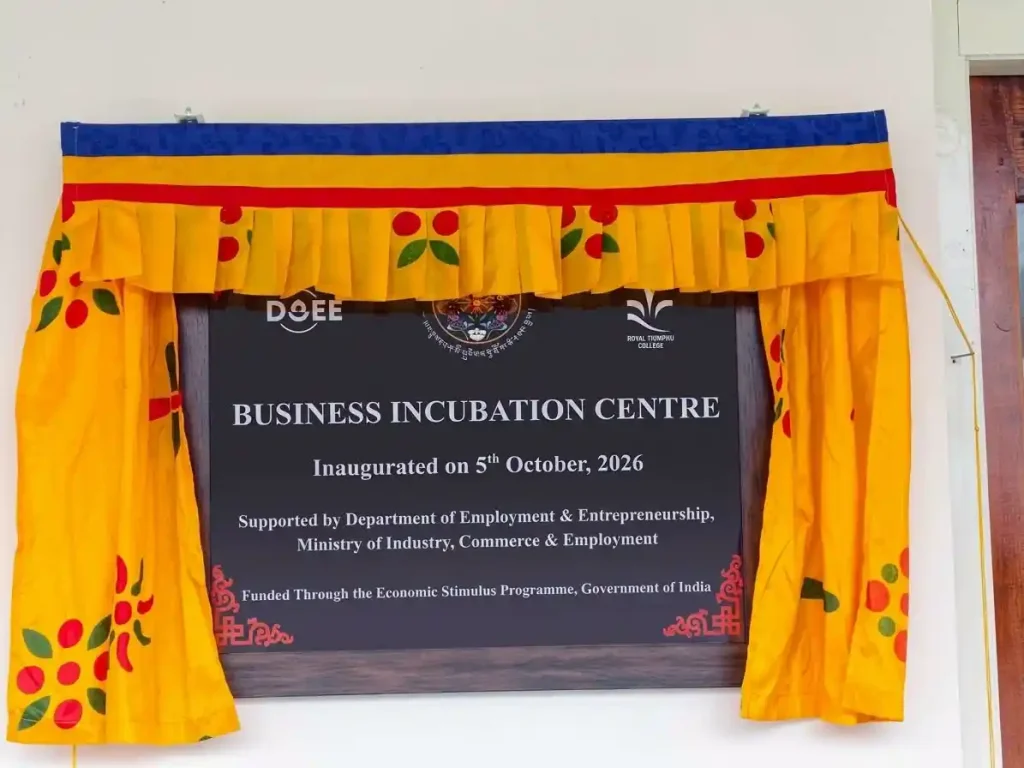
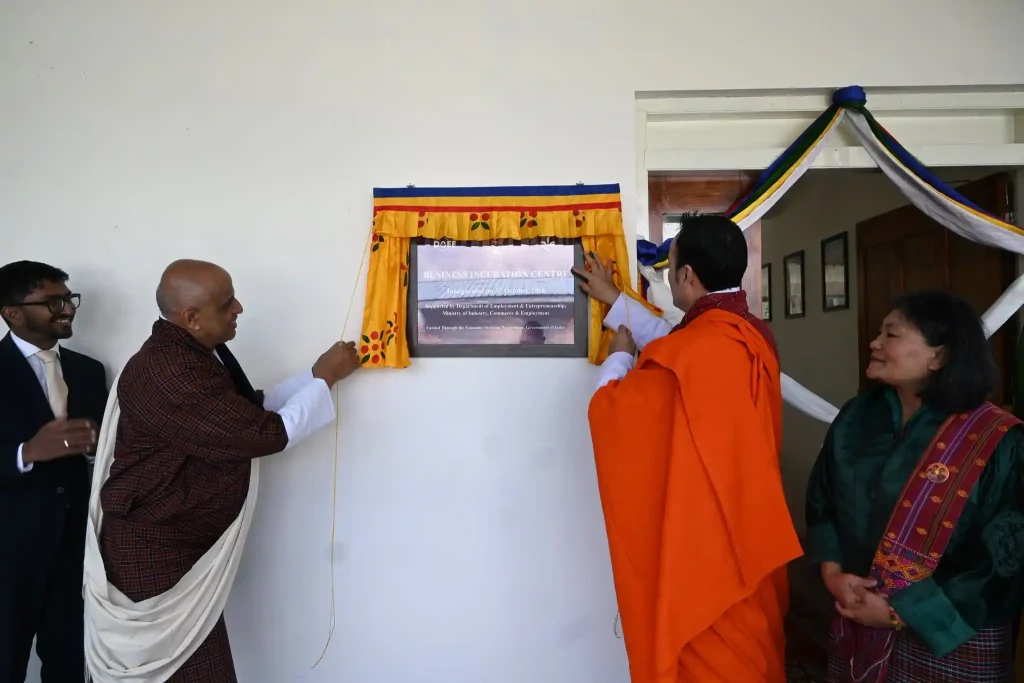
In a move aimed at strengthening Bhutan’s entrepreneurial ecosystem and encouraging innovation among young people, Royal Thimphu College (RTC) inaugurated its Business Incubation Centre (BIC) on October 5, marking a new chapter in the institution’s efforts to bridge academic learning with enterprise development.
The inauguration ceremony was attended by Minister of Industry, Commerce and Employment Lyonpo Namgyal Dorji, alongside representatives from the Department of Employment and Entrepreneurship (DoEE), the United Nations Development Programme (UNDP), and other institutional partners.
The newly established centre is expected to provide a platform for students to explore entrepreneurial ideas, develop business-oriented skills and gain exposure to the opportunities and challenges of establishing enterprises in Bhutan’s evolving economy.
Following the inauguration, Lyonpo Namgyal Dorji addressed first-year students pursuing programmes in Business Foundations, Development Economics and Communication Arts, highlighting the importance of entrepreneurship, technological adaptability and innovation in shaping the country’s economic future.
During the interaction, the minister drew attention to the potential of Brand Bhutan as a foundation for developing distinctive businesses and strengthening the country’s economic identity. He also discussed Bhutan’s recent economic trajectory and its ambitions to expand opportunities across sectors such as tourism, agriculture and investment.
A significant part of the discussion focused on the changing nature of employment in the wake of rapid technological advancements. With artificial intelligence transforming traditional industries and creating new avenues for enterprise, the minister underscored the importance of preparing young people for an increasingly dynamic labour market.
The address also touched upon His Majesty’s vision for the Gelephu Mindfulness City (GMC), an initiative envisioned to unlock new economic possibilities and create opportunities for Bhutanese youth. Against this backdrop, educational institutions were encouraged to become spaces where students could experiment with ideas, develop solutions and cultivate an entrepreneurial outlook.
The establishment of the Business Incubation Centre comes at a time when Bhutan is seeking to strengthen private-sector participation, promote innovation and equip its younger population with skills relevant to emerging economic opportunities.
The initiative has been supported by the Department of Employment and Entrepreneurship and the Ministry of Industry, Commerce and Employment, with financial assistance from the Government of India under the Economic Stimulus Programme (ESP).
The project was spearheaded by Sonam Choden, in collaboration with Dipan Pradhan and Madhav Verma from the college’s Business Programme.
For Royal Thimphu College, the centre represents an effort to extend education beyond conventional classroom instruction by encouraging students to translate knowledge into practical ideas and potential business ventures.
By bringing entrepreneurship into the academic environment, the initiative seeks to nurture a generation of young Bhutanese equipped not only to participate in the changing economy but also to contribute to its future growth.


