An eco-tourism initiative near Mount Jomolhari seeks to generate rural employment, revive traditional craftsmanship and redefine Himalayan hospitality.
Bhutan’s high-altitude settlements could emerge as a new frontier for sustainable tourism as local entrepreneurs explore innovative ways to turn the country’s natural and cultural heritage into economic opportunities for mountain communities.
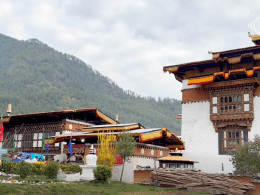
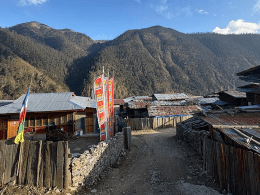
At Jangothang, situated approximately 4,200 metres above sea level near the base of Mount Jomolhari, a youth-led initiative is developing premium accommodation that combines contemporary hospitality with the traditional lifestyle of Bhutanese highlanders.
The initiative, undertaken by the Soe Eco-Tourism group, represents an attempt to develop a community-driven tourism economy in a region where geographical isolation, harsh climatic conditions and limited employment opportunities pose considerable developmental challenges.
Rather than introducing conventional hotel infrastructure into the mountains, the project draws upon indigenous architectural knowledge and locally available materials. Traditional yak-hair weaving, a craft historically associated with nomadic communities, forms an important component of its design.
The revival of this practice could have implications beyond tourism. As commercially manufactured materials increasingly replace traditional products, creating a viable market for indigenous craftsmanship could encourage younger generations to acquire skills that might otherwise disappear.
Creating livelihoods beyond conventional tourism
The economic potential of the initiative extends well beyond accommodation. Local agricultural producers, yak herders, artisans and hospitality workers could all participate in an interconnected rural economy supported by tourism.
Visitors would also have opportunities to experience traditional highland life, including local food, dairy production and pastoral practices, allowing communities to derive greater economic value from their existing cultural resources.
Such initiatives are particularly relevant to Bhutan’s broader employment challenges. The World Bank has identified the creation of quality employment opportunities, particularly for young people and women, as an important priority for sustaining the country’s developmental achievements.
Bhutan’s efforts to diversify its economy and address youth migration require opportunities that make rural livelihoods economically attractive without compromising the country’s environmental commitments.
Balancing commercial opportunity with conservation
Developing tourism infrastructure in environmentally sensitive mountain regions, however, requires careful management. Waste disposal, water availability, transportation and the preservation of fragile ecosystems remain significant considerations.
The Jangothang project is expected to incorporate environmental management measures alongside its hospitality services, with operations being planned ahead of the 2027 Snow Leopard Festival.
The initiative reflects the potential of Bhutan’s high-value, low-impact tourism philosophy to support a more decentralised model of economic development.
For Bhutan, the long-term opportunity lies not merely in attracting affluent travellers to remote destinations but in ensuring that tourism revenue reaches the communities responsible for preserving those destinations.
If commercially viable and environmentally responsible, such enterprises could provide a replicable development model for other Himalayan settlements, demonstrating that economic modernisation need not come at the expense of cultural identity or ecological integrity.