


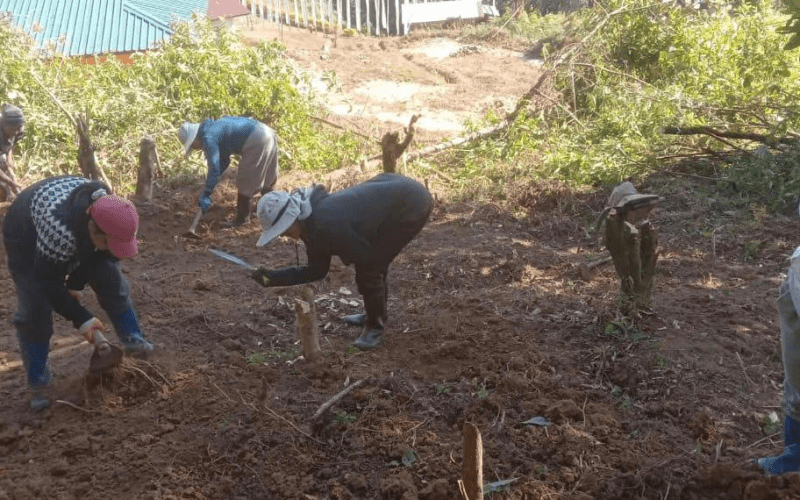
In Bhutan’s quiet Dagana district, a deserted school campus that once echoed with children’s voices is finding a new purpose — this time as the centre of a women-led agricultural movement aimed at rebuilding rural livelihoods.
Seven local women have joined hands to transform the abandoned property into a cooperative farming venture focused on sustainable agriculture and community development. Backed by funding from the European Union (EU), the initiative is expected to create stable income opportunities while introducing environmentally responsible farming practices in the region.
The project is being implemented under the Local Agriculture and Production-Based Economic Development (LAPBED) programme, which seeks to strengthen grassroots economies and empower vulnerable communities, particularly women in rural Bhutan.
Organisers say the women’s group plans to cultivate high-value crops such as aloe vera and coffee, products that are increasingly gaining demand in nearby commercial centres. The farmers are also exploring opportunities to supply emerging markets connected to Dagapela town and the rapidly developing Gelephu Mindfulness City.
Although the initiative is still in its early stages, visible progress has already been made. Community members have cleared sections of unused land and established irrigation systems to prepare for cultivation. However, the group continues to face several hurdles, including delays in accessing project funds and a shortage of trained personnel with technical farming expertise.
Despite these challenges, supporters of the project remain optimistic. EU representatives involved in the programme have been providing technical support in areas such as governance, market analysis, and business networking to help ensure the venture becomes financially sustainable.
The Dagana initiative is one of 13 community-based projects being supported nationwide through the EU-backed programme. Officials say the broader goal is not only to improve incomes but also to encourage collective ownership and local decision-making in rural development efforts.
For many residents, the transformation of the abandoned school symbolises more than economic opportunity. It reflects a growing effort to revive rural communities through cooperation, innovation, and women’s leadership — turning neglected spaces into productive centres of hope and resilience.


