


As the impacts of global warming and climate change intensify, countries across the world are facing an increasing risk of natural disasters. For Bhutan, located in the young and geologically fragile Himalayan range, the threat is particularly significant. Recognising the growing risks, the country has taken a new step to strengthen its disaster preparedness and response systems.
One of the major challenges during emergencies in Bhutan is the transportation of relief materials across its rugged and mountainous terrain. In such conditions, aerial transport services have often proven to be the fastest and most effective way to deliver aid to affected communities. However, arranging transport during a crisis can be time-consuming, as it involves several administrative procedures that can delay urgent response efforts.
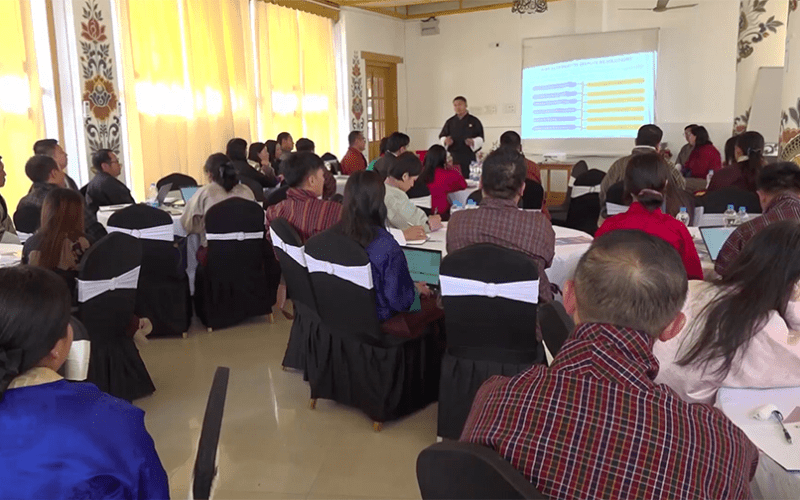
To address this issue, nearly 70 procurement officers recently participated in a sensitisation programme on the newly launched Emergency Logistics Preparedness Procurement Manual. The initiative aims to ensure that procurement processes remain transparent, accountable, and efficient during emergency situations.
The manual was developed by the Department of Procurement and Properties with support from the World Food Programme (WFP). Officials say it is designed to close institutional gaps and ensure that government agencies are better prepared before disasters occur.
Peter Rodrigues, Representative and Country Director of the UN World Food Programme in Bhutan, said the goal is to ensure that response time is significantly reduced during emergencies.
“What we are doing now is preparing them to be ready for an emergency so that minimum time is lost in responding wherever the need is,” he said. “Once this system is in place, it will be easier for all districts to respond very quickly.”
The manual introduces several measures aimed at improving preparedness. These include advance planning, identifying reliable suppliers and service providers, and establishing clear procurement procedures that can be activated during emergencies.
Rodrigues emphasised that even minor delays in response can have serious consequences during disasters.
“Delay of even one day can cost many more lives,” he said. “The procurement team is working on ways to shorten the time required to respond in any emergency. When they return, they will be able to sign pre-contracts with suppliers so that essential goods and services can be delivered quickly in case of natural disasters.”
The Emergency Logistics Preparedness Procurement Manual is expected to come into force from the next financial year.
With disaster risks projected to rise in the region, officials believe the new system will help Bhutan respond faster and more effectively when floods and other emergencies strike, ultimately reducing losses and saving lives.


