


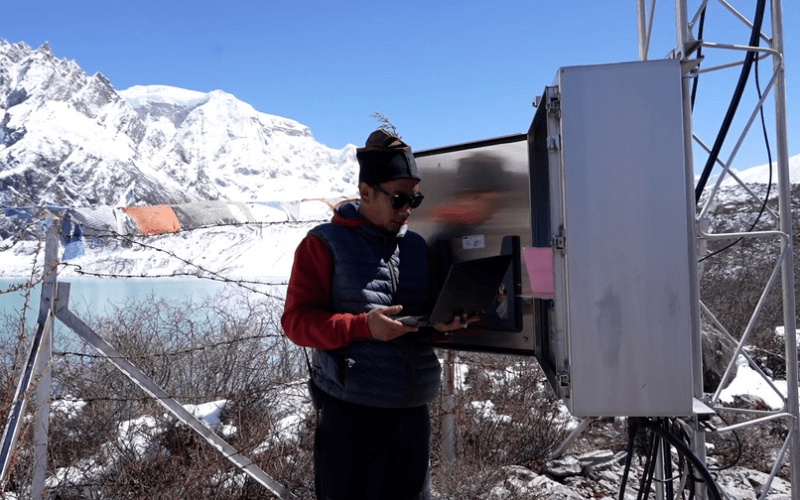
More than 4,000 metres above sea level, where oxygen is scarce and winter storms can erase mountain trails overnight, two men quietly shoulder a responsibility that extends far beyond the remote valleys of Lunana. Their work is not measured by what happens, but by what never does.
Every few weeks, technicians Jigme Lhendup and Nidup set out on demanding treks to inspect some of Bhutan’s most closely monitored glacial lakes, including Luggey Tsho. The journey takes hours across rugged Himalayan terrain, but reaching the lakes is only the beginning. The team must inspect sensors, verify water levels, test communication equipment and ensure every component of the country’s glacial lake early warning network remains operational.
The vigilance stems from painful experience. In 1994, Luggey Tsho burst through its natural moraine dam, unleashing a devastating glacial lake outburst flood that swept through the Pho Chhu valley, killing more than 20 people and damaging the historic Punakha Dzong. The disaster remains Bhutan’s deadliest GLOF event and continues to shape how the country prepares for future threats.
For Jigme, six years in Lunana have also provided a front-row seat to the effects of climate change. He has watched glaciers retreat rapidly, particularly around Thorthormi, where floating ice has gradually given way to an expanding lake. Snowfall patterns have also shifted, with winters becoming drier and snowfall arriving later in the season, increasing concerns over unstable glacial lakes.
Back at the monitoring station, the work continues around the clock. Water levels and weather observations are transmitted every three hours to flood monitoring centres in Thimphu and Wangdue Phodrang. During summer, when melting accelerates, lake inspections become even more frequent.
Yet the work is complicated by isolation. Several lakes remain outside mobile network coverage, leaving technicians dependent on HF radios and satellite phones that are often unreliable in severe weather. The team hopes planned Starlink connectivity and remote cameras will strengthen communication during emergencies, when every minute matters.
Far below, villages, farms and towns continue with everyday life, largely unaware of the constant watch unfolding high among the glaciers. While the mountains may appear silent, they are never unwatched. Hidden in Bhutan’s high Himalayas, a handful of technicians stand between changing glaciers and the communities that depend on timely warning to stay safe.


