


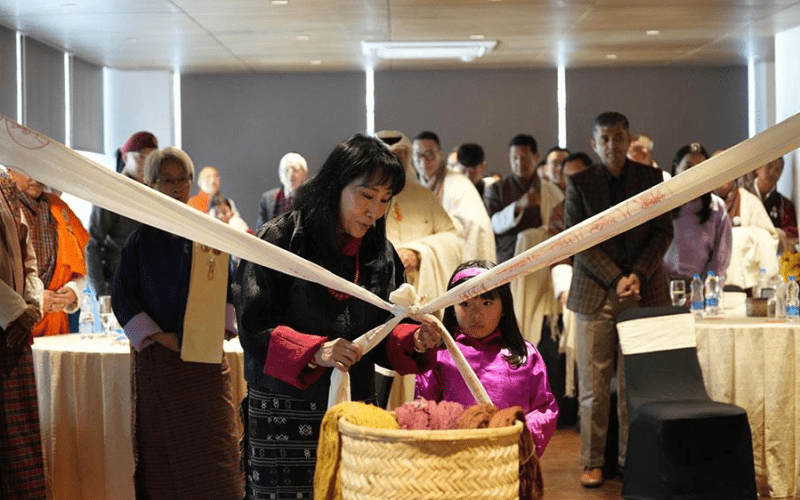
Thimphu witnessed a striking blend of ecology, artistry, and innovation this week as Gyalyum Tseyring Pem Wangchuck unveiled a new biodiversity-inspired craft collection. The initiative positions Bhutan’s creative industry at the intersection of environmental responsibility and economic opportunity, transforming ecological pressures into sources of empowerment.
A central highlight of the exhibition was a line of products made entirely from Himalayan Iris clarkei—a plant classified as invasive in various regions of the country. Through the Rural Artisan Development and Advancement (RADA) initiative, the fibrous stalks of the iris have been reimagined into durable, elegant craft materials. What once threatened local biodiversity is now being redesigned as a marketable, sustainable fiber.
This transformation did not happen alone. The Youth Development Fund (YDF), in partnership with Nepal Knotcraft, has spent months training youth and community members in harvesting, processing, and weaving techniques specific to the iris plant. The result is not only a new craft medium, but also a new livelihood stream for artisans—particularly for young people seeking alternatives to urban migration and unemployment.
Art Meets Data, Culture Meets Innovation
The showcase extended beyond natural fibers. The Bioacoustic Scarf Collection captivated attendees with pieces whose motifs are drawn directly from the sound waves of native bird calls. Digital recordings of Bhutan’s avian species were translated into graphic weave patterns, blending conservation and couture.
Another standout was the Bhutan–Bharat Sari, a textile collaboration that marries Bhutanese design sensibilities with traditional Indian weaving methods. The garment underscores the region’s shared heritage and the power of cross-border creative partnerships.
Honoring a Vision of Stewardship
The launch was equally a cultural tribute. Organizers emphasized that the initiative reflects the ideals of His Majesty the Fourth Druk Gyalpo—particularly the guiding belief that environmental protection, cultural identity, and human wellbeing must advance together.
As the exhibition closed, the message was unmistakable: Bhutan’s craft sector is not merely preserving tradition, but actively reshaping it. From invasive species turned fiber to soundscapes turned silk patterns, the event offered a blueprint for how ecological mindfulness can coexist with, and even fuel, creative enterprise.


