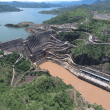


Bhutan is set to take a major step forward in its economic and energy development with the launch of the Dorjilung Hydroelectric Power Project (DHPP), a USD 1.7 billion investment that is being hailed as one of the country’s most transformative infrastructure initiatives to date.
Located on the Kurichhu River, the massive hydropower project is expected to significantly reshape Bhutan’s economic landscape. Once operational, DHPP will generate more than 4,500 gigawatt-hours of clean electricity annually—an increase of about 40 percent in the nation’s total energy production. The project is also projected to boost electricity exports by 42 percent, reinforcing hydropower’s central role as the backbone of Bhutan’s economy.
Government officials and development partners estimate that DHPP could raise Bhutan’s gross domestic product (GDP) by approximately 2.4 percent. In addition, construction and associated activities are expected to create around 5,000 jobs, offering a substantial employment boost, particularly in rural and semi-urban areas.
A major objective of the project is to strengthen Bhutan’s energy security. During winter months, when river flows decline and domestic power generation drops, Bhutan has traditionally relied on costly electricity imports. DHPP is designed to eliminate this dependence by providing sufficient generation capacity year-round. In other seasons, surplus electricity will be exported, generating steady foreign exchange earnings that can be channeled into social services such as health care, education, and rural development.
The project is structured as a public-private partnership (PPP), combining public oversight with private-sector efficiency. Druk Green Power Corporation, Bhutan’s state-owned hydropower developer, holds a 60 percent stake, while India’s Tata Power owns the remaining 40 percent. The partnership reflects growing regional cooperation in clean energy development and cross-border power trade.
Financing for DHPP is being anchored by the World Bank Group, which is providing USD 815 million in support. This contribution is expected to catalyze an additional USD 900 million from private investors, highlighting strong international confidence in Bhutan’s hydropower sector and long-term economic prospects.
While most of the electricity generated by DHPP will be exported, a portion will be allocated for domestic consumption. This will help meet rising energy demand from households, businesses, and emerging industries, supporting Bhutan’s broader development goals. Expanded access to reliable electricity is also expected to encourage private investment in manufacturing, tourism, and digital services.
Beyond national economic indicators, the project is anticipated to bring tangible benefits to local communities in and around the project area. Planned infrastructure upgrades include improved roads, bridges, and communication networks, which will enhance connectivity and access to markets. Increased economic activity during construction and operation is expected to stimulate small businesses, create service-sector jobs, and raise household incomes.
Environmental sustainability remains a central pillar of the initiative. By generating large volumes of renewable energy, DHPP will help Bhutan maintain its status as a carbon-negative country and contribute to regional efforts to reduce greenhouse gas emissions. The project aligns with Bhutan’s long-standing commitment to balancing economic growth with environmental protection.
Experts view DHPP as more than just another power plant—it represents a strategic investment in Bhutan’s future. By strengthening energy security, increasing export revenues, and creating thousands of jobs, the project has the potential to drive inclusive growth and improve living standards across the country.
As construction moves forward, policymakers and citizens alike are watching closely, hopeful that the Dorjilung Hydroelectric Power Project will become a cornerstone of Bhutan’s next phase of development—one powered by clean energy, regional cooperation, and sustainable prosperity.