
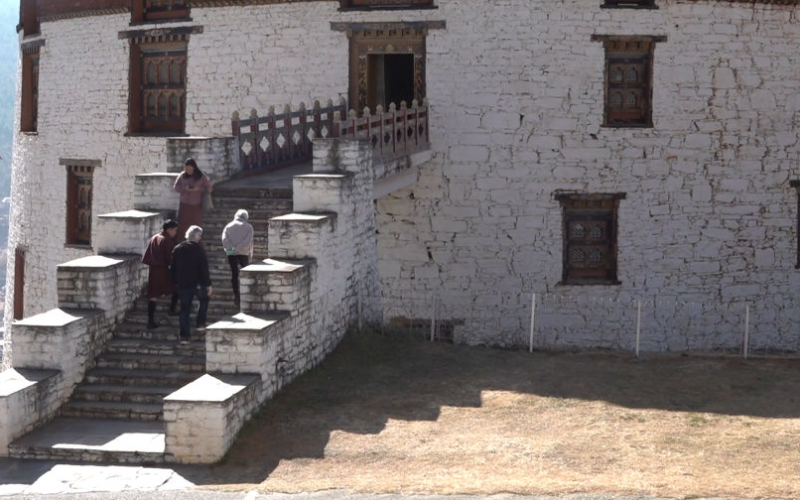
Six years after reopening its doors, Paro’s National Museum is quietly transforming into one of Bhutan’s most dynamic cultural spaces, drawing growing numbers of both local residents and international travellers.
Housed in the historic Ta Dzong, the museum was forced to shut down after the 2011 earthquake and remained closed for eight years while extensive renovation work was carried out. When it finally reopened in 2019, expectations were high, but early visitor numbers remained modest, prompting museum officials to reconsider how Bhutan’s heritage was being presented.
In the 2022–2023 financial year, the museum recorded just over 2,000 Bhutanese visitors and about 8,000 international tourists. For a national institution, the figures were a wake-up call.
“We realised that we could no longer rely on traditional ways of displaying artefacts,” said Kamal Pokwal, senior conservator at the National Museum. “By rethinking how we present our collections and tell our stories, we have been able to attract more visitors.”
The museum responded with a shift towards curated special exhibitions, interactive storytelling, and stronger engagement through media and public outreach. The changes have reshaped the museum into a more contemporary and immersive space, while still preserving its historical character.
The impact has been significant. By the 2023–2024 financial year, local visits climbed to more than 7,800, while international arrivals crossed 44,000. Revenue from entry fees rose to over Nu 28 million.
Growth continued the following year, with more than 57,000 international tourists and over 8,500 Bhutanese visiting the museum, pushing total earnings beyond Nu 33 million. Halfway through the current financial year, attendance has already surpassed 74,000 visitors, nearly equalling last year’s total.
Entry fees remain accessible, with Bhutanese nationals paying Nu 100 and international visitors Nu 500. Students, researchers, and senior citizens above 65 are exempted.
Visitors say the museum offers more than a visual experience—it provides a bridge between generations.
“You can learn so much about our country here,” said Dendup Tshering, a local visitor. “I would encourage young people to visit, understand our history, and pass that knowledge on to their children.”
For international guests, the museum offers insight into Bhutan’s evolving society.
“The discipline and the way of life in the past were very different,” said Sanjay, a visitor from India. “While society has changed, the museum reminds us of what has been preserved and what we have moved away from.”
Looking ahead, museum officials believe that community participation will be central to sustaining this momentum. Plans are underway to collaborate with schools in Paro, including a student-curated exhibition during this year’s Paro Tsechu.
The museum also intends to expand outreach at the gewog level, develop student-led and artist-led exhibitions, and strengthen ties with local tourism stakeholders.
“Our goal is to make the museum a living cultural institution, rooted in the community,” said Pokwal.
With rising footfall and an evolving approach to heritage presentation, Paro’s National Museum is steadily reclaiming its place as a cornerstone of Bhutan’s cultural landscape.


