


The recent visit of Chief Justice of India Surya Kant to Bhutan from March 3 to 6, 2026, has been warmly received across the Kingdom as a meaningful step in deepening the longstanding friendship and cooperation between our two nations. This high-level judicial exchange, coming soon after Justice Kant assumed office as the 53rd Chief Justice of India in late 2025, builds directly on the Memorandum of Understanding (MoU) signed between the Supreme Courts of Bhutan and India in October 2024. It reflects the shared commitment to strengthening judicial ties in an era of rapid change and technological advancement.
From a Bhutanese perspective, the visit underscores the unique and special relationship that has defined Bhutan-India relations for decades—one rooted in mutual respect, trust, and shared values. Bhutan has always valued India’s consistent support in our development journey, including in the judicial sector. Justice Kant’s engagements during the visit highlighted practical ways India can continue to assist Bhutan in modernizing our judiciary while preserving the principles of Gross National Happiness (GNH) that guide our society and institutions.
Key Highlights of the Visit
Upon arrival, Chief Justice Surya Kant met with his counterpart, Lyonpo Norbu Tshering, Chief Justice of Bhutan, along with other judges of the Supreme Court in Thimphu. These discussions focused on areas of mutual interest, including capacity building, legal education, and the exchange of best practices. The visit reinforced the spirit of the 2024 MoU, which has already facilitated initiatives such as the placement of Bhutanese law clerks at the Supreme Court of India.
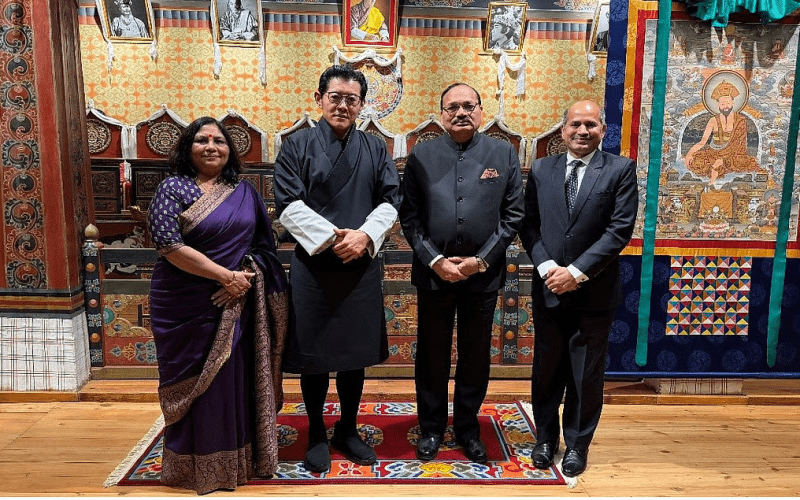
One of the most appreciated aspects was Chief Justice Kant’s audience with His Majesty The King Jigme Khesar Namgyel Wangchuck on March 5 in Thimphu. During this warm and cordial meeting, Justice Kant offered comprehensive support from the Indian judiciary for the digitisation and digitalisation of judicial processes in Bhutan. He emphasized technical assistance and the sharing of best practices to make justice more accessible and efficient. Both leaders exchanged views on ways to further enhance bilateral ties, reflecting the deep goodwill that characterizes interactions at the highest levels between our countries.
Chief Justice Kant also called on Prime Minister Tshering Tobgay, where conversations centered on the enduring partnership between Bhutan and India. The discussions highlighted India’s ongoing support for Bhutan’s judicial development, including opportunities for collaboration in legal education, training programs, and capacity building for Bhutanese law students and judicial professionals.
A particularly inspiring moment came when Chief Justice Kant delivered a public talk on “Access to Justice in the 21st Century” at the Royal University of Bhutan. He proposed innovative, technology-driven reforms tailored to Bhutan’s context—such as establishing “justice kiosks” in rural areas, simplified digital filing systems, and tele-law services—to bridge gaps and ensure that justice reaches every citizen, even in remote gewogs. He also announced the Indian Supreme Court’s willingness to host Bhutanese law students for internships and exchange programs, with support for boarding and lodging to remove financial barriers. These ideas resonated deeply, as Bhutan continues to balance tradition with modernization in our pursuit of equitable justice.
Why This Visit Matters to Bhutan
In Bhutan, we view the judiciary not merely as an institution but as a guardian of dharma, fairness, and the well-being of our people. Chief Justice Kant’s emphasis on technology as an enabler—rather than a replacement—for human-centered justice aligns closely with our own aspirations. As a small nation with vast mountainous terrain and a dispersed population, improving access to justice through digital tools could transform how Bhutanese citizens engage with the legal system.
Moreover, the visit reaffirms India’s role as a reliable partner. From training programs to knowledge-sharing, such cooperation helps build the capacity of our young lawyers, judges, and legal scholars at institutions like the Jigme Singye Wangchuck School of Law. It also opens doors for our future legal professionals to gain exposure to one of the world’s largest and most dynamic judiciaries.
As Bhutan navigates the challenges of the 21st century—balancing Gross National Happiness with global influences—this gesture of solidarity from India’s Chief Justice strengthens our confidence. It is a reminder that true friendship is demonstrated through actions that uplift and empower.
In the words of many Bhutanese who followed the visit, it was not just a diplomatic engagement but a reaffirmation of shared values: justice, compassion, and mutual progress. We look forward to the fruits of this collaboration in the months and years ahead, confident that stronger judicial ties will contribute to the prosperity and harmony of both our nations.