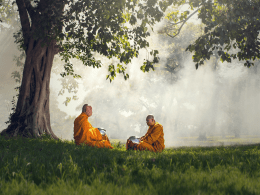
The announcement in India’s Union Budget 2026, presented by Finance Minister Nirmala Sitharaman on February 1, marks a significant step forward in developing Buddhist circuits across the North Eastern states of Arunachal Pradesh, Sikkim, and Assam. For Bhutan, this initiative is far more than a domestic Indian tourism policy, it represents a meaningful enhancement of our shared spiritual and cultural heritage, with potential to deepen people-to-people ties, boost regional connectivity, and reinforce the enduring bond between our two nations.
Buddhism as the unbreakable bridge
Bhutan and India share a profound Buddhist legacy that dates back centuries. Buddhism arrived in Bhutan in the 8th century through Guru Rinpoche (Padmasambhava), the revered Indian tantric master who is regarded as the “Second Buddha” in our Vajrayana tradition. Many of Bhutan’s most sacred sites, monasteries, and practices trace their spiritual origins to Indian masters and the land where Lord Buddha attained enlightenment. To Bhutanese pilgrims, India is not merely a neighbor but the sacred birthplace of Buddhism—the land of the Eight Great Places associated with the Buddha’s life, from Lumbini to Bodh Gaya, Sarnath, and Kushinagar.
This shared heritage has always been a cornerstone of India-Bhutan relations. Regular exchanges of sacred Buddha relics from India to Bhutan, joint celebrations of Buddhist festivals, and high-level visits underscore how Buddhism fosters mutual respect, peace, and compassion. When Indian leaders emphasize Buddhist heritage, it resonates deeply in Bhutan, where Gross National Happiness is rooted in Buddhist principles.
Why the North Eastern Buddhist circuits matter to Bhutan
The states of Arunachal Pradesh, Sikkim, and Assam are not distant parts of India—they are our immediate cultural and geographical kin. Arunachal Pradesh and Sikkim host ancient monasteries and sites deeply connected to Buddhism, much like Bhutan’s own Dzongs and lhakhangs. Tawang Monastery in Arunachal, one of the largest in the world, shares traditions with Bhutan’s monastic communities. Sikkim’s Rumtek and other gompas reflect similar lineages, while Assam has historical ties through Buddhist influences along ancient trade routes.
Developing dedicated Buddhist circuits in these areas, improving infrastructure, accessibility, interpretation centers, and pilgrimage facilities, will make these sacred sites more reachable for Bhutanese pilgrims. Currently, travel to places like Tawang or Gangtok involves permits and logistical challenges, but enhanced circuits could streamline cross-border spiritual journeys, encourage group pilgrimages, and foster monastic exchanges.
Such developments with help in attracting pilgrims from Nepal, Sri Lanka, Thailand, and beyond. For Bhutan, it opens opportunities for reciprocal benefits: more Bhutanese visiting these sites strengthens cultural affinity, while Indian tourists discovering Bhutan’s pristine monasteries (Paro Taktsang, Punakha Dzong, etc.) could grow under sustainable frameworks.
Economic and diplomatic dividends
Beyond spirituality, this initiative supports regional stability and prosperity. Improved roads, airports, and tourism infrastructure in India’s Northeast, already a focus under the Act East Policy, could enhance connectivity to Bhutan. Better links via Sikkim or Assam would facilitate trade, eco-tourism, and cultural exchanges, benefiting border communities on both sides.
In an era of global challenges, reinforcing Buddhist values of non-violence, mindfulness, and harmony through such developments sends a powerful message of peace. It builds on existing collaborations, like relic expositions and joint heritage projects, to make our partnership even more resilient.