Bhutan has unveiled an ambitious investment plan aimed at protecting its water resources from the growing impacts of climate change, with an estimated USD 850 million required over the next 15 to 20 years.
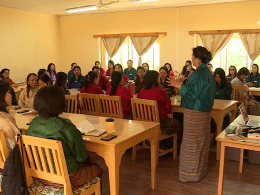
The Climate Adaptation Investment Plan for the Water Sector, launched yesterday evening, outlines a coordinated national response to increasingly erratic rainfall, water shortages, floods and the threat of glacial lake outburst floods.
The plan identifies 187 adaptation activities grouped under 11 strategic investment packages. These interventions span drinking water supply, irrigation, watershed conservation, flood protection, hydropower security and measures to reduce risks posed by glacial lakes.
Officials said the plan was developed in response to the growing uncertainty surrounding Bhutan’s water systems. Climate change is expected to alter rainfall patterns, with some areas receiving excessive rain while others may face shortages when water is needed most.
“Sometimes we might get more rain that is unnecessary. Sometimes, when we need the rain, we will not have the precipitation,” said Tenzin Khorlo, Chair of the Inter-Agency Working Group under the Department of Water, Ministry of Energy and Natural Resources.
He said the country needed to prepare now for future climatic conditions rather than respond to crises after they occur.
“The current Bhutan Climate Adaptation Plan for the water sector is trying to look at the whole investment sector in water through a coordinated approach so that we have national ownership and national standing,” he said.
The proposed investments are expected to bring direct benefits to households and communities. These include more dependable drinking water supplies, improved irrigation for farmers and stronger protection for settlements located downstream of glacial lakes and flood-prone rivers.
The plan also seeks to safeguard watersheds and hydropower infrastructure, both of which are critical to Bhutan’s economy and long-term development.
Rather than implementing all 187 activities simultaneously, the government has classified them according to urgency and the time required for execution. Some measures have been identified for immediate implementation, while others will be carried out over five-, 10- and 15-year periods.
“All the packages are important and needed for our climate adaptation for another 15 to 20 years,” Khorlo said. “Nevertheless, we have to see which ones can be done immediately, which can be done in another 10 years and which can be done in another 15 years.”
According to the plan, financing will be sought from a combination of domestic resources, international climate funds, development partners, private investors and blended-finance mechanisms.
Mobilising the estimated USD 850 million is expected to be one of the main challenges in turning the plan into action.
The investment framework was prepared through a whole-of-government process involving 13 agencies. Officials said the approach was intended to avoid fragmented projects and ensure that water-related adaptation measures are implemented under a common national framework.
The government also plans to present the initiative at regional and international forums, including the upcoming United Nations climate conference, or COP. The move is expected to help Bhutan attract technical support, build partnerships and secure funding for implementation.
With communities, farms, energy production and ecosystems all dependent on reliable water supplies, the plan represents one of Bhutan’s most comprehensive attempts to prepare the sector for a warmer and more unpredictable climate.