


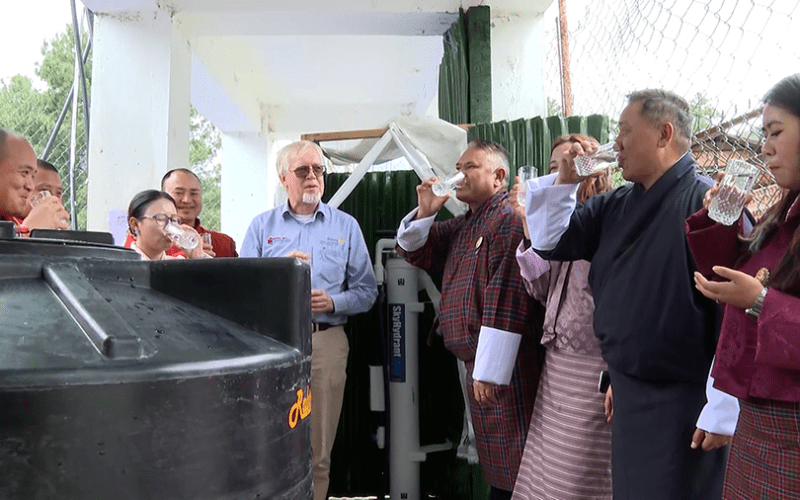
Clean drinking water has become more accessible for hundreds of monks and visitors at Dechenphodrang Monastic School and Dechenphu Lhakhang, following the installation of advanced water filtration systems.
In a collaborative effort, the Department of Culture and Dzongkha Development, along with the Rotary Club of Thimphu and Disaster Aid Australia, has installed two Sky Hydrant water filters at the monastery. The initiative is expected to benefit nearly 300 monks, as well as the many visitors who frequent the site for prayers and worship.
The Sky Hydrant is a portable water purification system designed to transform contaminated water into safe drinking water. Each unit is capable of filtering between 6,000 and 10,000 litres daily, ensuring a steady and reliable supply of clean water.
For years, the monastery faced challenges with water quality. According to Ratu, vice principal of Dechenphodrang Monastic School, the water often contained visible impurities such as dirt and sand. He noted that access to clean drinking water will be especially beneficial for the young monks, improving both their health and daily living conditions.
The impact extends beyond drinking water alone. Dechenphu Lam Nado highlighted that muddy water previously made it necessary to rely on bottled mineral water for religious offerings. This not only added to costs but also contributed to environmental waste. With the new filtration system in place, the monastery can now reduce its dependence on bottled water while ensuring cleanliness and sustainability.
Officials say the initiative is part of a broader effort to improve basic infrastructure in religious institutions. Phuntsho Wangmo, an executive engineer with the department, emphasized that access to clean water, though often taken for granted, plays a crucial role in health, comfort, and overall well-being. She added that the department aims to expand similar projects to other monastic schools through continued partnerships.
The effort is already set to grow, with another Sky Hydrant installation planned at Sangchen Choekhor Monastery. Authorities hope this marks the beginning of a wider movement to provide sustainable water solutions across religious and educational institutions.
The installation at Dechenphodrang represents more than just a technical upgrade—it is a meaningful step toward improving hygiene, reducing waste, and enhancing the quality of life for those who live, study, and worship there.


