


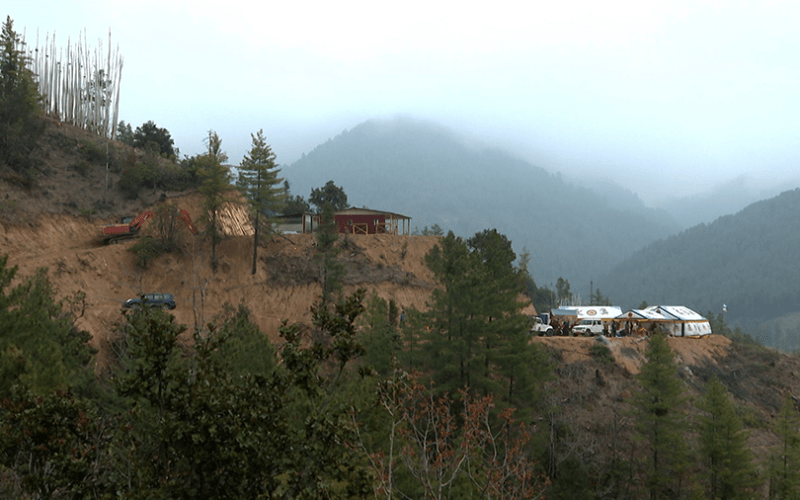
Efforts to enhance disaster preparedness and climate resilience in Bhutan received a major boost with the launch of a new weather and flood warning facility at Yusipang on Friday. The centre, to be developed under the National Centre for Hydrology and Meteorology (NCHM), is expected to significantly improve the country’s ability to deliver timely and accurate weather alerts.
Perched at an altitude of around 2,800 metres and situated away from the congestion of the capital, the site has been carefully selected to overcome long-standing technical challenges. Officials say the elevated location will allow clearer satellite communication, a critical factor in strengthening forecasting systems.
Project Lead Thinley Phuntsho explained that the current setup within the city has limitations, including restricted space and poor satellite line-of-sight. Operations are presently split across multiple buildings, making coordination inefficient. The new facility is expected to consolidate these functions into a single, purpose-built complex equipped with modern infrastructure.
Backed by financial support from the Government of India, the project carries an estimated cost of Nu 328 million and is scheduled for completion by 2029. Once operational, it will serve as Bhutan’s central hub for real-time weather forecasting and hazard monitoring.
Speaking at the ceremony, Aniket Mandavgane highlighted the broader benefits of the initiative, noting that improved forecasting would help communities prepare for extreme weather, assist farmers in planning agricultural activities, and enable emergency responders to act more effectively.
Officials also emphasized the centre’s regional significance. As reported by Bhutan news websites, Director General Karma Dupchu said the facility would not only serve Bhutan but could also support downstream areas by sharing critical weather and flood data, enhancing preparedness beyond national borders.
In addition to its operational role, the complex will feature an education and training wing aimed at inspiring interest in meteorology and climate sciences among young people. Plans are also in place to strengthen collaboration with neighbouring regions such as Assam and West Bengal, and to contribute data to international platforms including the World Meteorological Organization.
As climate-related risks continue to intensify, authorities believe the new centre will play a pivotal role in improving early warning systems and safeguarding lives and livelihoods across the region.


