


From the suspension bridge that crosses the Mo Chhu, Punakha Dzong appears almost too perfectly composed to be real — whitewashed walls rising six stories from a spit of land where two rivers meet, a golden-roofed tower catching the last light, jacaranda trees in April scattering lavender blossoms across the courtyard like something staged for effect. It isn’t staged. It has simply had nearly four hundred years to arrange itself this well.
Built in 1637 by the Zhabdrung Ngawang Namgyal, the unifier of Bhutan, Punakha Dzong was constructed, according to tradition, without a single nail or written plan — a claim that becomes easier to believe once you’re inside, wandering courtyards where massive timber columns and cantilevered beams interlock with a precision that feels closer to joinery than architecture. The name translates roughly to “the palace of great happiness,” and for over three centuries it served as the seat of Bhutan’s government, until the capital moved permanently to Thimphu in 1955.
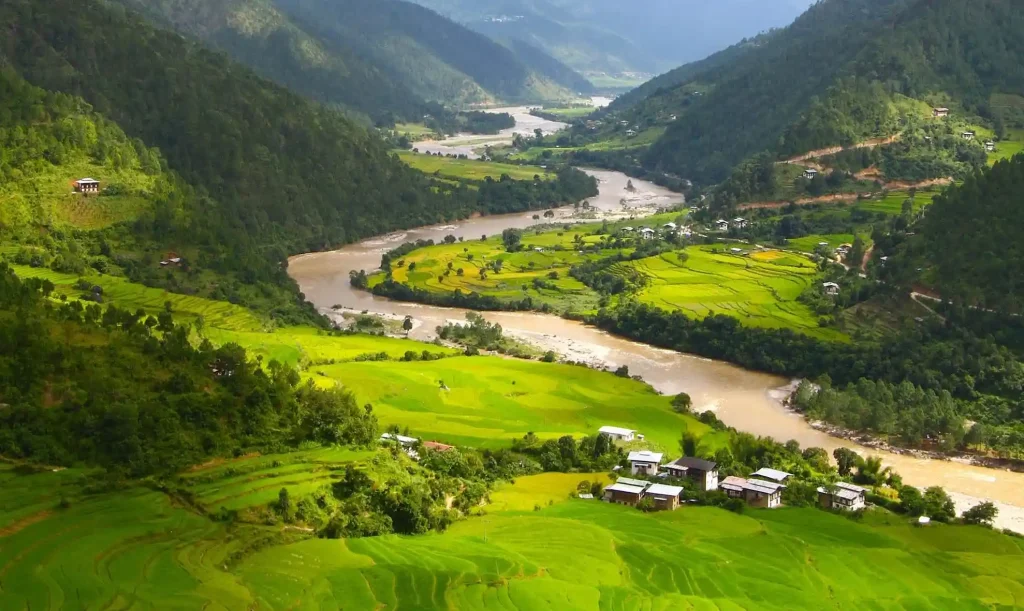
The dzong has earned its serenity the hard way. It has survived four major fires, a catastrophic flood in 1994 when a glacial lake burst upstream, and repeated earthquakes, each time rebuilt with the same techniques used by the original craftsmen. Inside the utse, the central tower, sits the Machey Lhakhang, housing the embalmed body of the Zhabdrung himself, a relic so sacred that even the king bows before entering.
Every winter, the Je Khenpo and the central monastic body relocate here in a formal procession from Thimphu, escaping the capital’s cold, restoring the dzong to its original function as both government and monastery for several months at a time.
The building has also, in more recent memory, hosted the coronation of Bhutan’s kings and the 2011 royal wedding of King Jigme Khesar Namgyel Wangchuck — a fact that gives the dzong a living, rather than merely historical, weight. It is not a preserved monument performing its own past; it remains the functioning stage for the nation’s most important civic and religious moments.
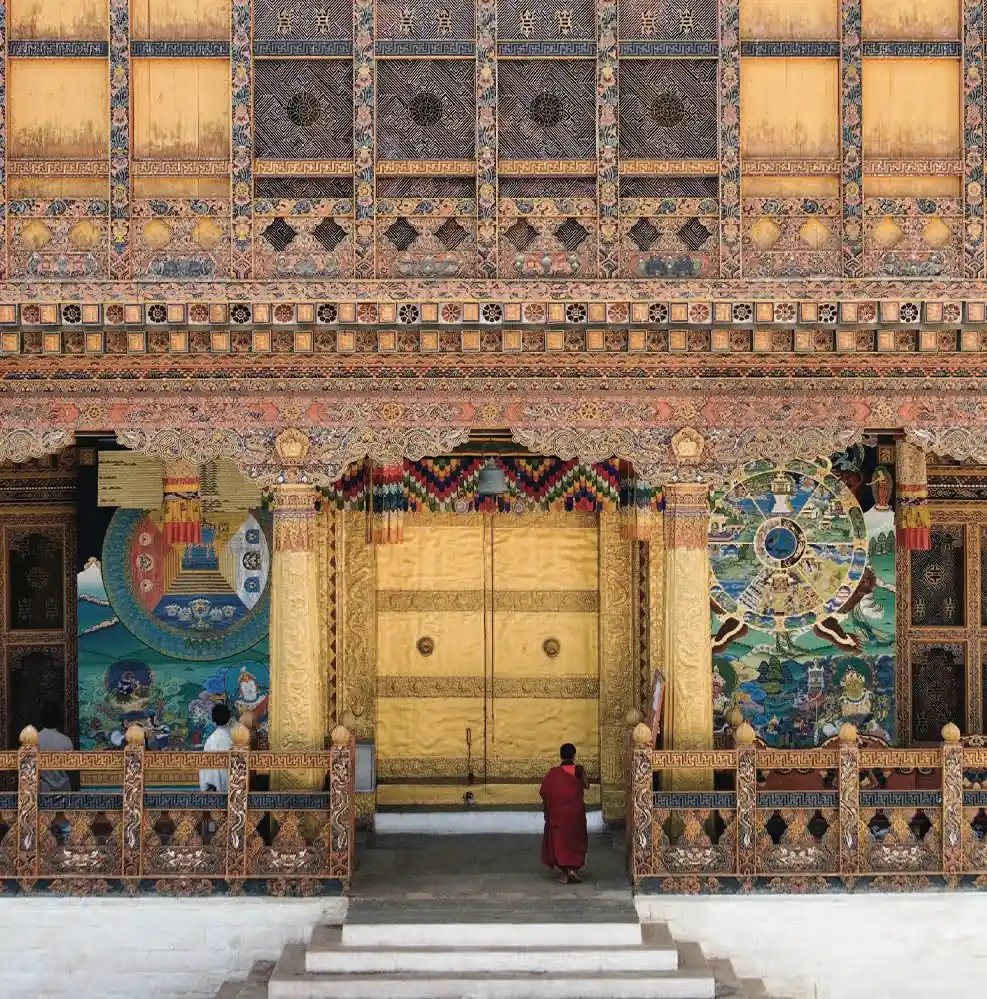
Inside, the temple halls are extraordinary even by Bhutanese standards — soaring murals depicting the life of Buddha, wrathful protector deities rendered in colors so saturated they seem freshly painted, courtyards vast enough to hold the full pageantry of a tshechu when the festival calendar brings one here. Monks move between chambers with unhurried purpose, robes catching the light through high windows, indifferent to the visitors angling for a photograph.
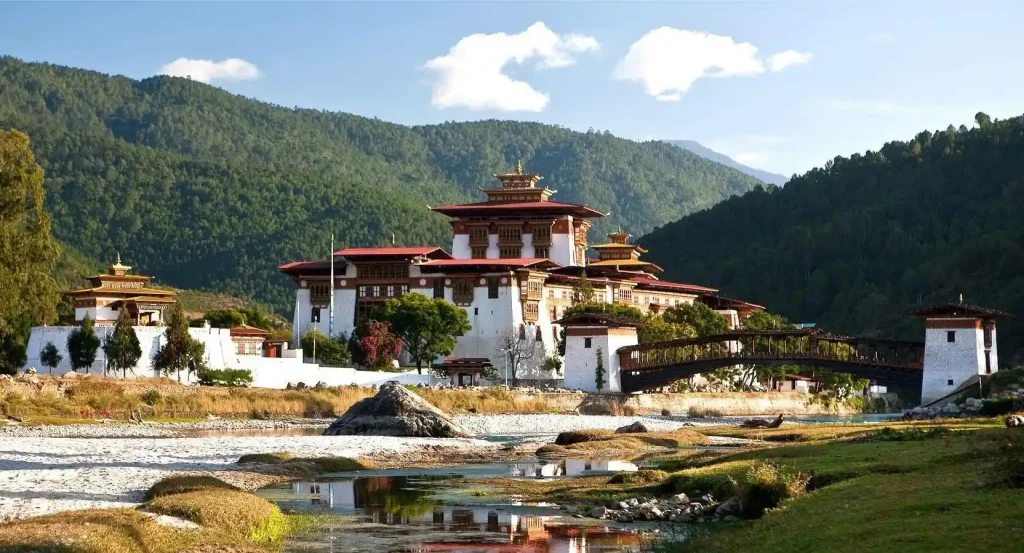
Late afternoon is the hour to see it properly, when the crowds thin and the light turns the whitewashed walls gold, and the two rivers below run loud enough to fill the silence. Few buildings anywhere manage to feel simultaneously monumental and intimate. Punakha Dzong, somehow, does both — a fortress built to project power that has, over four centuries, softened into something closer to a promise: that grandeur and devotion need not be separate things.


