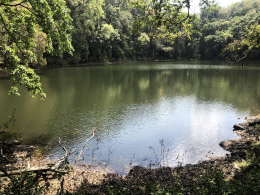
Bhutan’s four oldest temples were built in the 7th century, and each one comes wrapped in the same extraordinary legend. According to tradition, a giant demoness lay supine across the entire Himalayan region, her body blocking the spread of Buddhism. To subdue her, the Tibetan king Songtsen Gampo built 108 temples in a single day, each one pinning down a different part of her body across Tibet, Bhutan, and the borderlands. Four of those temples rose in what is now Bhutan. All four still stand, and each remains an active site of pilgrimage today.
1. Kyichu Lhakhang, Paro
Kyichu Lhakhang is generally considered the temple that most secures Songtsen Gampo’s legend in Bhutanese history — the historian Karma Phuntsho has gone so far as to say the country’s recorded history effectively begins with its founding. Built to pin the demoness’s left knee, the temple sits a short drive north of Paro town, tucked between the Tenchen Choeling nunnery and the trail up to Paro Taktsang.
What visitors find today is a modest but atmospheric complex, expanded over the centuries by successive Buddhist saints, with prayer wheels lining its perimeter and locals filing in daily to offer butter lamps. The temple’s best-known curiosity is an orange tree in its courtyard that reportedly bears fruit year-round; local belief holds that eating one brings good fortune.
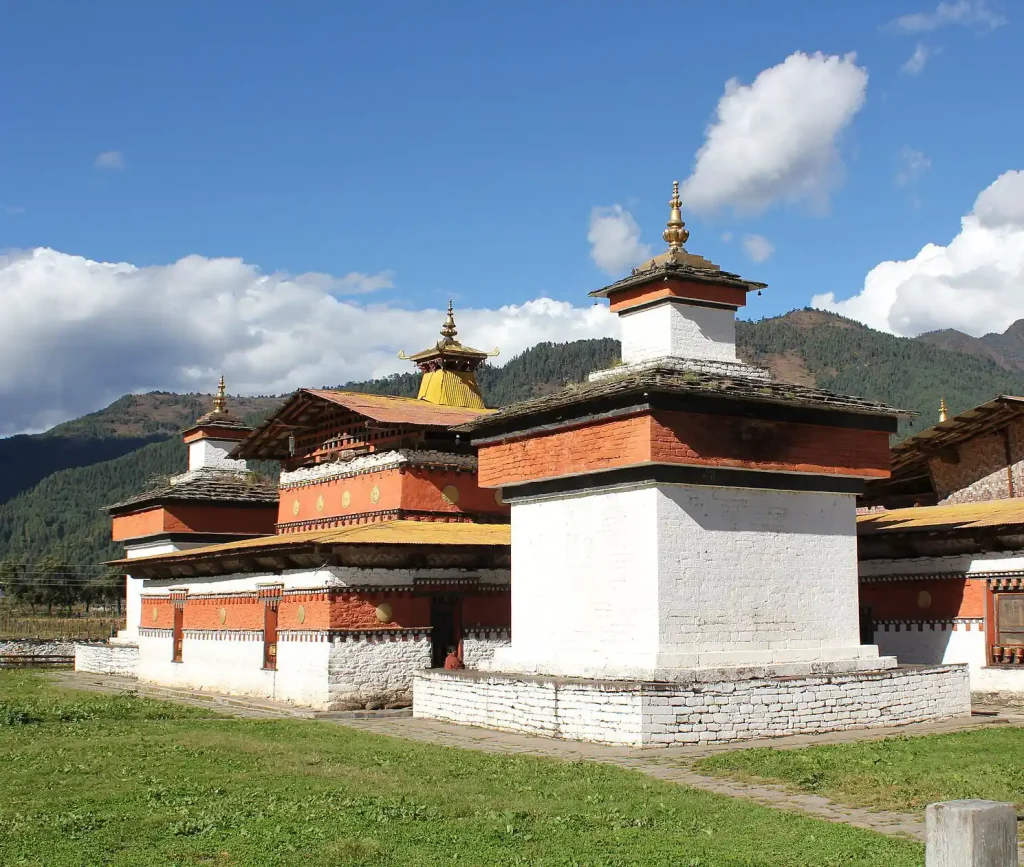
2. Jampa Lhakhang, Bumthang
If Kyichu Lhakhang anchors Bhutan’s founding myth in the west, Jampa Lhakhang does the same for the central valleys of Bumthang, and many Bhutanese historians consider it the point where Buddhism first properly entered the country.
Dedicated to Jampa, or Maitreya, the Buddha of the future, the temple is said to rest on the demoness’s left knee and remains one of Bhutan’s most sacred sites. Guru Rinpoche is said to have visited and blessed the temple in the eighth century, and it was later restored by the local ruler Sindhu Raja after Guru Rinpoche returned his stolen life force.
Today Jampa Lhakhang is best known internationally for the Jambay Lhakhang Drup, an October festival culminating in a fire ceremony and a midnight naked dance — one of the most striking events on Bhutan’s religious calendar, and reason enough on its own to plan a Bumthang visit around it. Discover Bhutan_Four oldest tem…
3. Lhakhang Karpo, Haa
Travel two hours west into the Haa Valley, over the high Chele La pass, and the temple trail continues at Lhakhang Karpo — the White Temple, named for the white pigeon that Songtsen Gampo is said to have released to scout the site, landing at the foot of the three sacred peaks known as Rigsum Goempo.
Unlike its more famous cousins in Paro and Bumthang, Lhakhang Karpo receives few foreign visitors, a function of Haa’s own history: the valley remained closed to tourism until 2002, decades after the rest of western Bhutan opened up.
Inside, the temple’s central image is a statue of Amitayus, the Buddha of long life, which local legend says was installed by Ap Chundu himself — the guardian deity of the Haa Valley, whose cult predates and coexists with the temple’s Buddhism.
Lhakhang Karpo now also serves as the seat of Haa’s district monastic body, housing the monks and religious administration for the entire valley. That civic role peaks each year during the Haa Tshechu, a three-day festival of masked dances held in the temple’s courtyard, drawing pilgrims from across the valley alongside a separate, shamanistic ceremony honoring Ap Chundu directly, in which a procession departs from the temple to make offerings at a nearby meadow. Discover Bhutan_Four oldest tem…
4. Lhakhang Nagpo, Haa
A short walk uphill from Lhakhang Karpo sits its counterpart, Lhakhang Nagpo — the Black Temple, built at the same time and sharing its founding story, but with a very different character.
Local legend explains the pairing with a striking image: two birds, one white and one black, are said to have flown from Songtsen Gampo’s own consciousness across the Himalayas from Tibet, marking the two sites where they landed. Lhakhang Nagpo was built where the black bird landed.
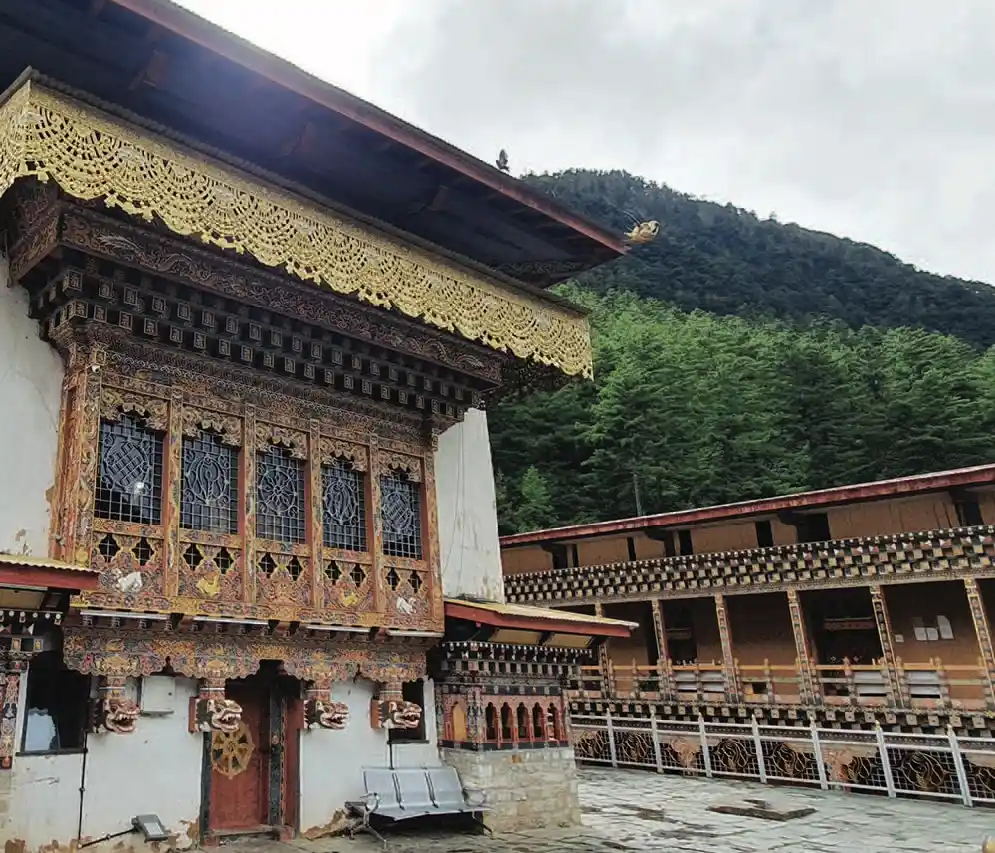
The temple is dedicated to a protector deity associated with the Buddhist guardian Mahākāla, and is said to be built directly over a lake: an opening in the temple floor reportedly gives a view down to the water beneath, believed by locals to be home to a mermaid spirit, or tshomen.
A sacred oak stands nearby, itself treated as a minor pilgrimage stop — making Lhakhang Nagpo the most quietly unusual of the four, a temple built, quite literally, on top of a myth. Discover Bhutan_Four oldest tem…