Most trekkers who attempt the Snowman Trek, in full, do not finish it. That single fact tends to silence anyone tempted to describe the route casually. The Snowman is not a hike so much as an expedition, and the handful of travelers each year who commit to it arrive already understanding they may not see it through.
The numbers alone explain why. Stretching some 347 kilometres across Lunana, Gasa, Wangdue Phodrang, and into Bumthang, with a highest point of 5,230 metres, the route is officially classified as hard, walkable only during the summer trekking months, and prone to altitude sickness and severe weather.
Most operators plan for somewhere between twenty-five and thirty days on the trail, though guides in Paro speak of groups who stretched it further after being pinned down by snow. Along the way, trekkers cross roughly fourteen high mountain passes, several above 5,000 metres, following the route past Jhomolhari — Bhutan’s second-highest peak — toward the settlement of Laya.
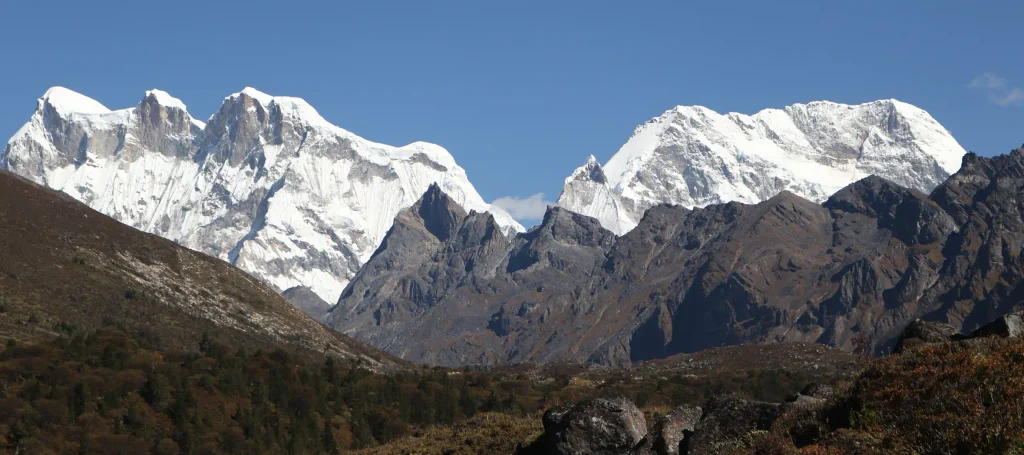
The opening stage — out of Shana, through blue pine and rhododendron forest thick with hanging moss, climbing steadily toward the Jomolhari base camp trail that most Snowman itineraries share with the shorter, more popular Jomolhari trek — is spectacular by any normal standard: waterfalls, yak pastures, views of the 7,300-metre peak that seems to rearrange the sky.
Beyond Laya, the trek turns into something else entirely. This is where Lunana begins — a region so remote it has no road access at all, reachable only on foot, and known locally by a name that translates roughly to “the dark inner region”.
The trek requires an early 5 a.m. start to cover twenty-five kilometres over ten or eleven hours before making camp again above 4,000 metres — a routine that repeats, day after day, for nearly three weeks. Cumulative ascent and descent across the full route exceeds 16,000 metres — roughly double the height of Everest measured from sea level — and villages along the way can be days apart, with no roads, no rescue infrastructure, and communication limited to a satellite phone carried by the guide.
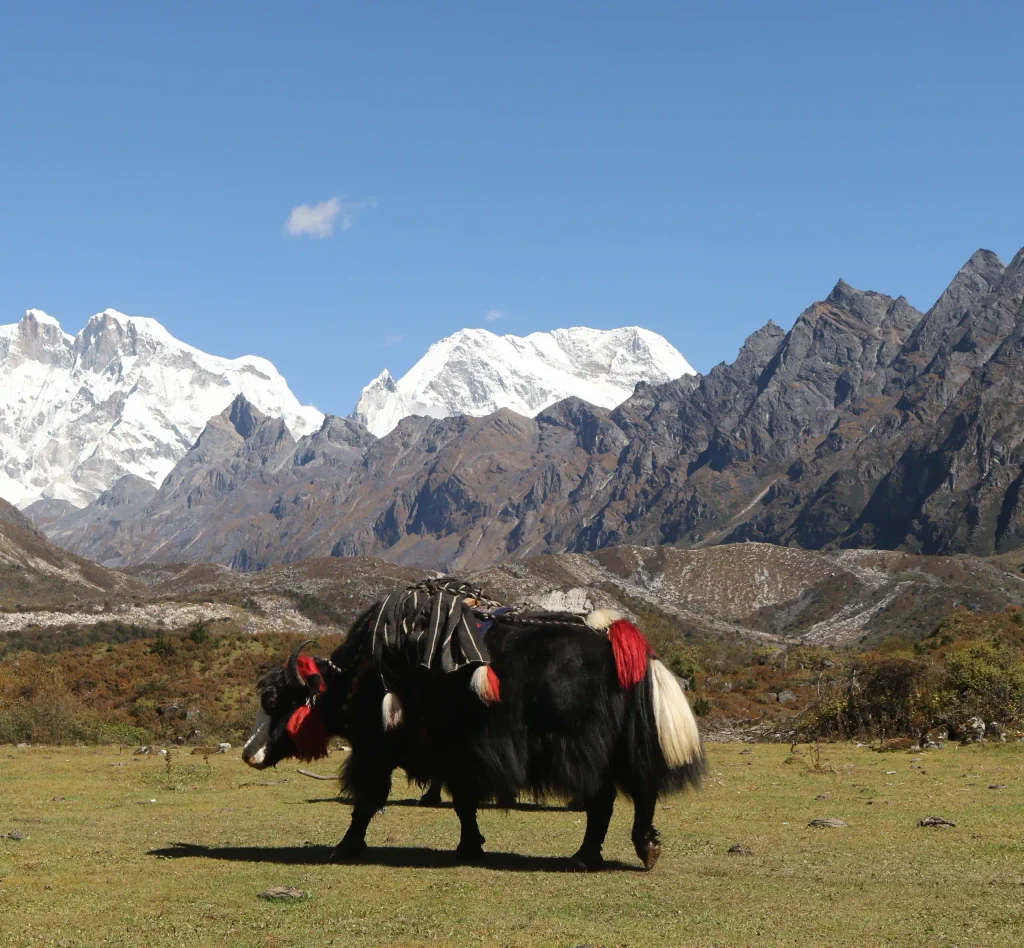
What makes the Snowman genuinely unusual, even among the world’s serious treks, isn’t only the altitude or the distance — plenty of expeditions match those numbers. It’s the compounding effect of duration. A trekker can train for a single brutal pass. It’s harder to train for the fortieth consecutive day of exertion at altitude, on food carried in by yak train, sleeping in a tent that has been wet more nights than dry. Guides describe the trek’s real casualty rate as attrition rather than injury — people who are physically capable but simply run out of reserves, mentally or otherwise, somewhere around the two-week mark.
Lunana itself has had an unusual moment in the global spotlight recently, thanks to Lunana: A Yak in the Classroom, the Oscar-nominated Bhutanese film about a young teacher posted to the region’s remote school. The film’s slow, textured portrait of yak-herding life and brutal isolation is, if anything, an undersell — the village it depicts sits roughly a week’s walk from the nearest road in any direction.
The Snowman trek offers something rarer than difficulty: a genuinely uninterrupted three weeks inside one of the last landscapes on Earth still organized entirely around yaks, weather, and distance — with no phone signal, no vehicle access, and no shortcut back to the world left behind.