


Bhutan’s story is often told as an anomaly in Asia—our Himalayan kingdom that never fell to colonial rule while its neighbors were carved up by empires. But this was not a matter of luck or geography alone. It was the result of a deliberate strategy: Bhutan chose isolation as a tool of survival. Encircled by formidable mountains, thick forests, and unpredictable rivers, it turned its landscape into a shield and its borders into firm lines of control.
For centuries, Bhutan’s leaders understood that engagement with expanding imperial powers came with risks that far outweighed the benefits. While trade and cultural exchange existed, they were tightly regulated. The country resisted external influence not by confrontation, but by absence—by limiting access, information, and dependency. In doing so, Bhutan preserved not only its sovereignty but also its cultural and political autonomy.
Yet isolation, while effective in preserving independence, could not indefinitely sustain a modern state. By the mid-20th century, the world had changed. The forces shaping global power were no longer purely territorial—they were economic, technological, and diplomatic. Bhutan faced a new question: how to engage without being overwhelmed.
Its answer was as deliberate as its earlier withdrawal. Rather than abruptly opening its borders, Bhutan adopted a carefully calibrated approach to globalization. It joined international institutions, established diplomatic relations, and cautiously expanded tourism—but always on its own terms. The famous “high value, low volume” tourism policy exemplifies this balance: Bhutan welcomes visitors, but limits their numbers to protect its environment and culture.
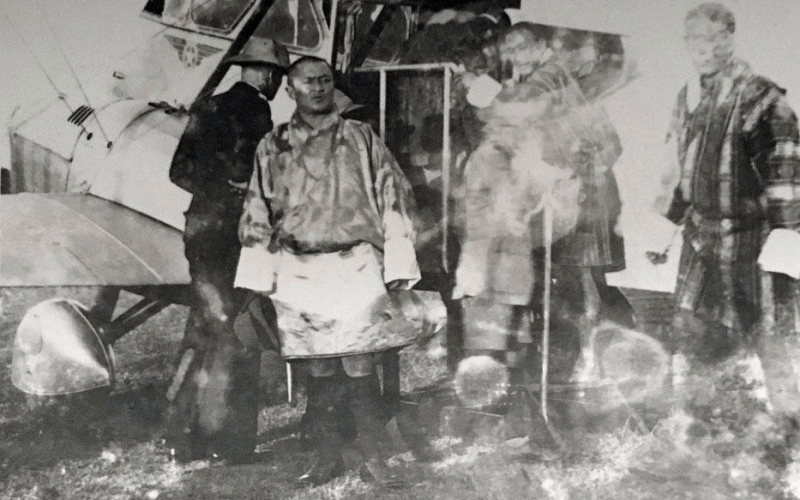
Nowhere is this strategic opening more visible than in Bhutan’s aviation sector. The establishment of a national airline and the development of Paro International Airport—one of the world’s most challenging airports to land in—symbolize a shift from closed doors to controlled gateways. Bhutan did not simply open itself to the world; it engineered how the world would enter.
This philosophy reflects a deeper principle that continues to guide Bhutanese policy: sovereignty is not just about resisting domination, but about shaping engagement. Whether in environmental conservation, where Bhutan remains carbon-negative, or in governance, where Gross National Happiness reframes development priorities, the country has consistently resisted adopting external models wholesale.
However, this balancing act is becoming more complex. Climate change, regional geopolitics, and economic pressures are testing Bhutan’s ability to remain insulated while staying connected. Youth aspirations are shifting, digital connectivity is expanding, and reliance on a narrow economic base—particularly hydropower—poses risks.
Bhutan’s challenge today is not unlike the one it faced a century ago, but under different conditions. Then, it had to decide how much to keep out. Now, it must decide how much to let in. The tools have changed—from mountain passes to flight paths, from isolation to selective integration—but the underlying question remains the same: how to preserve identity while navigating interdependence.
Bhutan’s journey offers a compelling lesson in statecraft. Independence is not a static achievement but an ongoing process. Where it once secured its sovereignty by closing its doors, its future depends on opening its skies—carefully, consciously, and always on its own terms.


