


Bhutan has taken a major step in strengthening its traditional healthcare system with the publication of a new medicinal textbook tailored to the country’s own healing practices and modern healthcare needs.
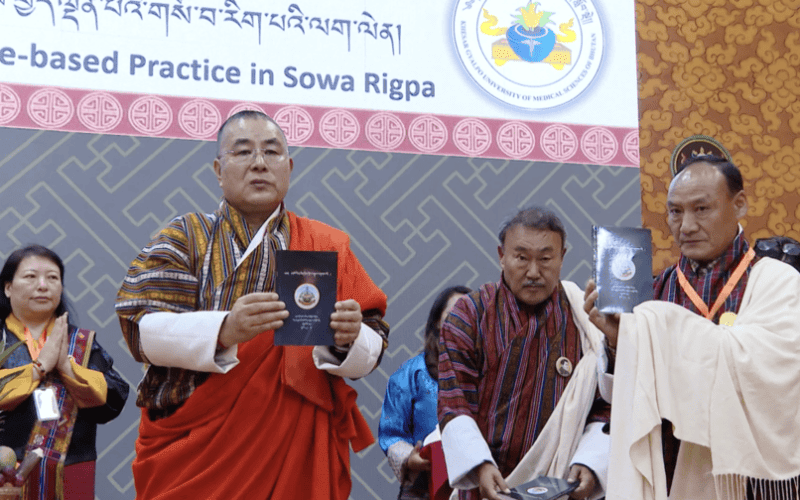
The Faculty of Traditional Medicine launched Zintig, a condensed textbook on Sorig, or the science of healing, during the 3rd National Sorig Conference, which concluded recently. The publication is expected to play a key role in preserving Bhutan’s centuries-old medical traditions while making them more practical and research-oriented for present-day use.
For years, students and practitioners relied on Kongtrul Zintig, a Tibetan medicinal text, as the primary reference for diagnosis and treatment in traditional medicine studies. However, experts at the faculty said the new publication has been designed specifically for Bhutan’s healthcare environment.
According to Drungtsho Tendrel Wangdi, Associate Professor at the Faculty of Traditional Medicine, the new text adapts traditional medical knowledge to local realities. He explained that medicines, disease symptoms, acupuncture methods and therapeutic practices differ in Bhutan, making the locally developed book more suitable for training and treatment within the country.
The textbook includes more than 100 medicines and diagnostic methods currently used in Bhutanese hospitals and clinics. Faculty members say this will significantly improve practical learning for students, especially those in advanced years of study.
Previously, students often had to study medicines that were not available in Bhutan, limiting their understanding to theoretical knowledge. With the introduction of Zintig, students will now be able to directly apply classroom learning during clinical training and hospital practice.
The publication is the result of more than two years of collaboration among over 10 traditional medicine experts who worked to discuss, draft and refine the material. The project reportedly cost around Nu 300,000.
Dean of the Faculty of Traditional Medicine, Sangay Wangdi, said that while Sowa Rigpa is rooted in ancient teachings, continuous research and evaluation are necessary to maintain its relevance and credibility. He stressed the importance of examining medicinal strengths and weaknesses and updating practices where necessary.
Health experts say the initiative reflects Bhutan’s broader effort to modernise its healthcare system without losing its cultural and medical heritage. By combining traditional healing wisdom with research, innovation and evidence-based approaches, the country hopes to ensure that its indigenous medical system remains both effective and sustainable for future generations.


