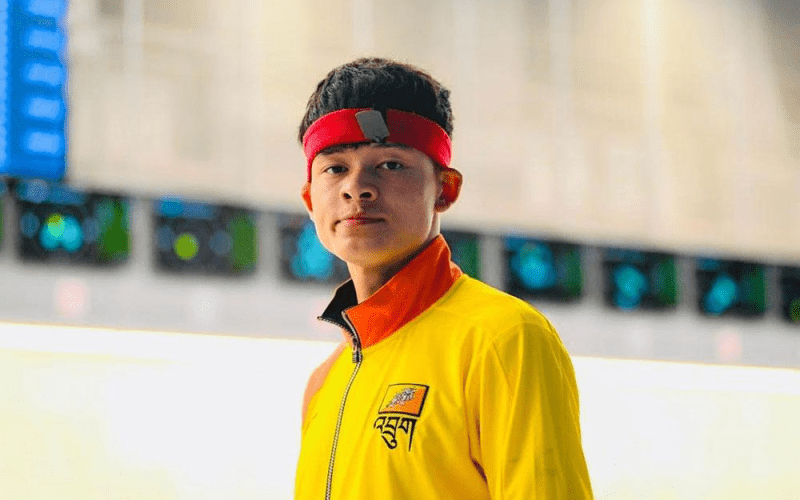
Tandin Wangchuk’s journey into competitive shooting began not with fanfare, but with quiet curiosity. At 23, the final-year student has grown into one of Bhutan’s most promising shooters, representing the country across multiple disciplines and steadily carving out a place on the continental stage.
Wangchuk was introduced to the sport at 19 after joining the Zilukha MSS Club, where he first handled an air pistol and observed senior athletes honing their craft. Watching their discipline and focus left a lasting impression. What started as admiration soon turned into ambition, pushing him to commit himself seriously to training.
His early progress was swift. In 2019, Wangchuk competed in the Inter-School Shooting Championship, where he clinched first place in the air pistol category. The victory was a confidence booster, affirming that his dedication could translate into results. “That competition showed me what was possible if I stayed consistent,” he has said of the experience.
Training opportunities expanded as he gained access to national sports facilities, where structured routines replaced casual practice. Under the guidance of experienced coaches such as Dorji Phurba, Wangchuk refined his technique, mental focus, and competition strategy. The mentorship, he notes, was crucial in helping him understand the finer margins that separate good shooters from great ones.
International exposure soon followed. Wangchuk represented Bhutan at the Asian Games in 2022, a milestone that exposed him to elite competition and the pressures of performing on a major stage. He later competed at the Asian Rifle Cup, using lessons from both events to reassess his training methods. Competing against seasoned international athletes, he says, highlighted areas where he needed to improve, particularly consistency under pressure.
Behind the scenes, institutional support has played an important role in sustaining his progress. The BEAST Program has provided Wangchuk with financial assistance, recognition, and performance-related backing, easing the burden that often falls on young athletes in less commercialised sports. Such support has allowed him to focus more fully on training and academic commitments.
Yet challenges remain. Bhutan’s limited calendar of domestic shooting competitions means fewer chances to test skills in match conditions. To compensate, Wangchuk relies heavily on self-motivation, setting personal benchmarks and analysing feedback from coaches and peers. Each training session becomes, in effect, its own competition.
As he prepares to complete his studies, Wangchuk remains focused on steady improvement rather than quick accolades. His story reflects the quiet perseverance behind Bhutan’s emerging sporting talents—athletes who, with limited resources but strong resolve, continue to aim higher, one carefully measured shot at a time.