


Bhutan’s long-standing approach to measuring national progress through people’s happiness and well-being could assume a more prominent role in future international development policies.
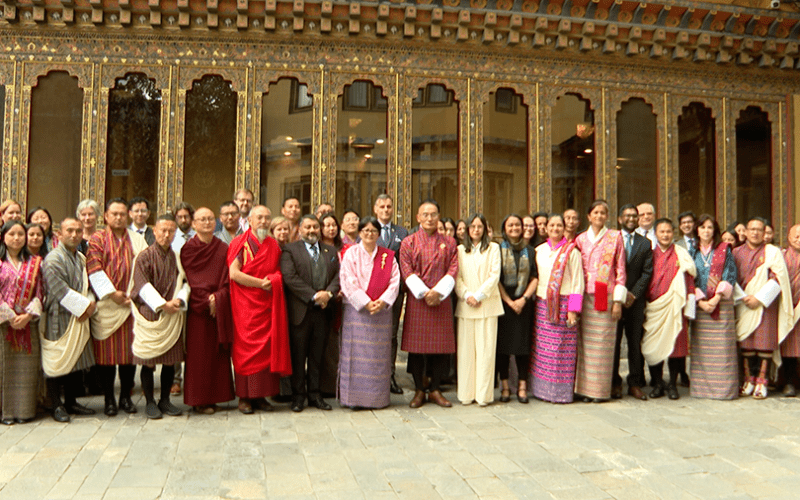
A five-day workshop held in Thimphu brought together experts and policymakers to examine the possibility of forming an international alliance dedicated to well-being-centred governance. The proposed platform would promote research, policy cooperation and practical initiatives aimed at ensuring that social and environmental well-being are considered alongside traditional economic measures such as Gross Domestic Product.
A major focus of the discussions was the global development framework that will follow the Sustainable Development Goals after 2030. Participants considered whether well-being could serve as a guiding principle for the next generation of international development targets.
The initiative comes at a time when the global community is increasingly questioning whether GDP alone provides an adequate picture of a country’s progress. In September 2024, United Nations member states adopted the Pact for the Future, which included a commitment to develop indicators that complement or extend beyond conventional economic measurements.
That effort gained further momentum in May, when a UN high-level expert group recommended the creation of a global dashboard measuring human well-being, social and economic inclusion, and environmental sustainability.
Xiaomeng Shen, Vice-Rector of the United Nations University, said Bhutan’s Gross National Happiness philosophy offers valuable lessons for the emerging international debate.
She described GNH as an inspiring model because Bhutan places the happiness and well-being of its people at the centre of governance. Development, she said, should not be treated as an end in itself but as a means of enabling people and other living beings to flourish.
According to Shen, Bhutan’s experience in both promoting and applying the GNH philosophy positions the country to play a leading role in shaping well-being-based development goals after 2030.
One of the first practical outcomes of the workshop will be a joint initiative between the United Nations University and The PEMA Secretariat. The two organisations plan to test an adapted version of Bhutan’s GNH framework outside the country.
The collaboration will involve developing an appropriate methodology and applying a modified GNH survey in another national or community setting. Although the pilot remains at the planning stage, it is expected to provide important evidence on whether Bhutan’s well-being model can be adapted to different cultural and policy environments.
The United Nations University is also preparing for the formal launch of an Alliance for Research, Policy and Practice. Plans are being considered to establish a hub at The PEMA Secretariat that could coordinate research, training and international cooperation on well-being-centred governance.
Revati Keshao Phalkey, Director at the United Nations University, said an agreement with The PEMA Secretariat would be an important first step in building a long-term partnership.
She said the proposed memorandum of understanding would provide a foundation for future programmes involving The PEMA Secretariat and other government institutions. The university also intends to support Bhutanese higher education institutions in strengthening academic programmes, including the development of master’s-level courses in public health.
Plans are also being explored to collaborate with local universities on training and co-certification programmes for community mental health workers. Such programmes could help expand access to mental health support while building professional capacity within Bhutan.
While several of the proposals discussed during the workshop have yet to be formally implemented, the meeting marked an important step in connecting Bhutan’s national development philosophy with international policy discussions.
In his special remarks, Prime Minister Tshering Tobgay said Bhutan’s development approach remains rooted in the dignity, well-being, future and happiness of its people. He said this conviction is one that Bhutan is proud to share with the international community.
The workshop concluded with participants expressing a common commitment to promote well-being as a central principle of future development.
The discussions reinforced Bhutan’s message that progress cannot be judged through economic expansion alone, and that the well-being of people, communities and the natural environment must remain at the heart of global development.


