


Farmers in Bhutan’s Pema Gatshel district are exploring new opportunities to increase their earnings by transforming locally grown cassava into cookies, cakes and other baked products, marking a shift towards value-added agricultural production.
The Cassava Green Hill Farm Group, based in Chhoekhorling Gewog, has begun diversifying its operations after nearly a decade of producing and selling cassava flour. The six-member group recently received baking training, enabling members to develop new products and expand their market opportunities.
The initiative gained momentum when the group showcased its cookies and cakes at the second Bathing Carnival in Telung, introducing consumers to products made from locally sourced cassava.
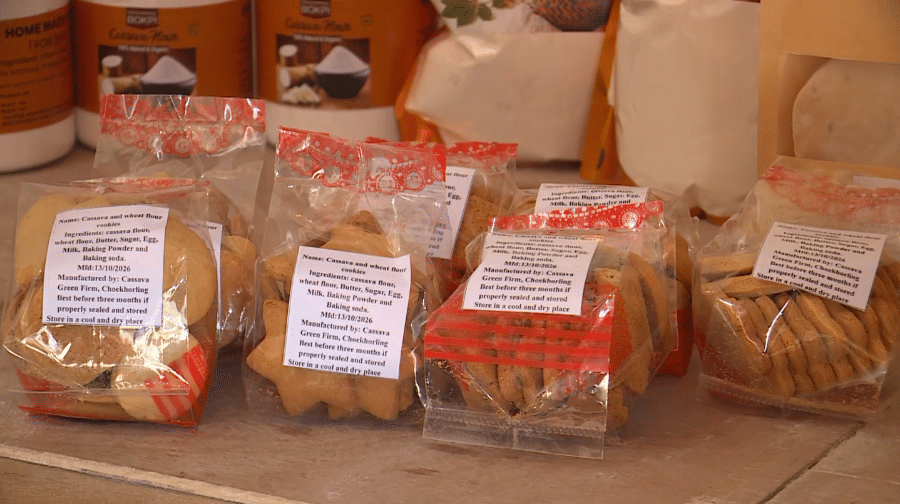
Group members believe diversification will help improve profitability while reducing dependence on flour sales. Previously, limited technical skills prevented them from exploring other products.
The group purchases cassava directly from local farmers, paying Nu 13 per kilogram for fresh produce and Nu 30 for dried cassava. This year, it has procured more than 1,000 kilograms of dried cassava, supporting agricultural livelihoods in the region.
According to local officials, farmers in Chhoekhorling have cultivated cassava across approximately 50 acres, generating annual earnings ranging from Nu 20,000 to Nu 50,000.
The baking training was organised by the district administration with support from Bhutan’s Department of Agricultural Marketing and Cooperatives.
Despite encouraging progress, the group faces manpower shortages and intends to recruit additional workers to increase production capacity.
The initiative highlights the potential of agricultural value addition in strengthening rural economies. By moving beyond raw agricultural products towards processed foods, local enterprises can explore new markets, improve income stability and create employment opportunities.
For Chhoekhorling’s farming community, the transition from cassava flour to bakery products represents a promising step towards sustainable livelihoods and greater economic resilience.


