


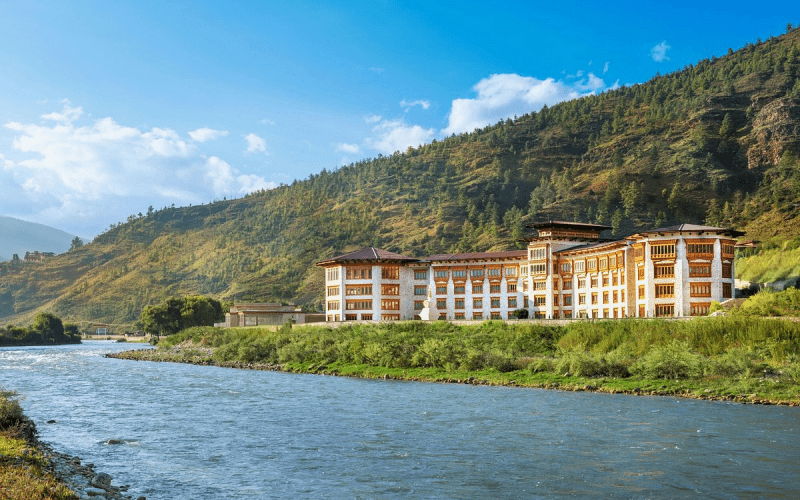
Bhutan’s tourism industry is confronting a stark imbalance: a rapidly expanding hotel sector and a visitor market that has yet to recover to levels capable of filling it.
Across the country — particularly in the western districts — new hotel buildings continue to rise, even as many existing properties struggle with chronically low occupancy rates. Industry figures indicate that in January, nationwide occupancy hovered at roughly 18 percent, far below what is needed to sustain operations, repay loans, and maintain staff.
In some regions, the situation is even more severe. In Haa, occupancy rates have reportedly dropped to between 2 and 6 percent — levels that hoteliers describe as unsustainable.
Construction Continues Despite Warning Signs
The paradox is striking. While rooms sit empty, new hotel projects continue to receive approvals. Observers note that construction activity has remained particularly strong in western Bhutan, where tourism infrastructure is already concentrated.
Financial regulators have begun to express concern. The Royal Monetary Authority (RMA) previously suspended loans for hotel construction, citing rising financial risks within the sector. Although restrictions remain in place, they have not entirely halted new developments.
The persistence of new projects raises questions about investment decision-making in an environment of weak demand.
Fragmented Oversight
Part of the problem appears rooted in the regulatory framework governing the industry. Different bodies are responsible for approving construction permits and certifying hotel standards, creating what some industry participants describe as a fragmented oversight system.
This separation means approvals for new buildings may proceed without a comprehensive assessment of market demand or existing capacity. Without coordinated planning, supply continues to expand independently of tourism trends.
Demand Lags Far Behind Capacity
Tourist arrivals remain significantly below the level required to fully utilize Bhutan’s existing hotel stock. Even modest improvements in arrivals would not be enough to absorb the surplus rooms currently available.
An 18 percent national occupancy rate suggests that more than four out of five hotel rooms were vacant in January. In areas like Haa, the figures paint an even bleaker picture.
Industry insiders warn that if visitor numbers do not rise substantially, financial strain on hotel owners could intensify. Fixed costs — loan repayments, maintenance, utilities, and staff wages — continue regardless of whether rooms are filled.
Incentives and Expectations
Some observers believe fiscal incentives may be contributing to continued investment. Tax breaks, policy expectations, or anticipated government support may be encouraging developers to proceed despite clear signals of oversupply.
There is also a perception within parts of the industry that government intervention could cushion losses if conditions worsen. Such expectations may be weakening market discipline, critics say, allowing projects to move forward that might otherwise be reconsidered.
A Sector at a Crossroads
Bhutan’s tourism model has long emphasized sustainability and high-value, low-volume travel. However, the current mismatch between hotel capacity and tourist arrivals suggests that planning within the accommodation sector has not fully aligned with this philosophy.
Without coordinated regulatory reform, improved demand forecasting, and a realistic assessment of capacity, the gap between supply and visitors may widen further.
For now, the evidence is visible across the country: newly built hotels standing beside older establishments — both waiting for guests who have yet to arrive.


