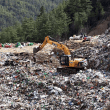

In a moment charged with historic significance and national pride, Bhutan today officially broke ground on the Gelephu International Airport, a monumental project poised to transform the nation’s future. With the roar of machinery and the hum of anticipation in the air, the launch marks not just the beginning of a construction project, but the dawn of a new era of connectivity, prosperity, and purpose for the Bhutanese people.
The airport, located in southern Bhutan, is designed to initially accommodate 1.3 million passengers annually, with the potential to expand its capacity to 15 million in the future. More than a feat of engineering, the airport is envisioned as a symbol of national ambition—an enduring legacy that will open the gates to global interaction and economic opportunity.
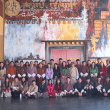
“We are laying the foundations of a legacy that will shape the lives of generations to come,” declared Bhutan’s leadership, as dignitaries, citizens, and members of the royal family gathered at the site. The presence of Her Majesty Queen Jetsun Pema and the royal children alongside Desuups and volunteers highlighted the deeply communal nature of the moment. “We are all in this together,” was the resounding sentiment.
This ambitious endeavor is not merely about building infrastructure; it is about fulfilling a national duty. Referring to the sacrifices and vision of His Majesty the Great Fourth, the speech recalled the legacy handed down to this generation: a peaceful, democratic, and united Bhutan. But preserving the status quo is not enough.
“Our generation has been given the extraordinary opportunity to build an even brighter future,” the address continued. “We must not allow fear or hesitation to prevent us from seizing this moment. If we fail, it is our children and grandchildren who will bear the cost.”
The Gelephu International Airport is envisioned as a vital link in Bhutan’s broader strategy of enhancing connectivity in all forms—air, road, digital, financial, and cultural. For a landlocked nation nestled within mountainous terrain, such connections are indispensable to sustainable development.
The airport is expected to become a key driver of economic growth, particularly for Bhutanese youth. It will create jobs, facilitate trade, boost tourism, and enable the free flow of ideas and innovation. As one speaker put it, “What we are building today is more than an airport—it is a gateway to opportunity and a beacon of hope.”
Crucially, the project has been made possible by the extraordinary generosity and patriotism of local communities. Families who had carved out their lives in the dense tropical jungles of Gelephu, often in the face of hardship and insecurity, gave up their land without hesitation when it was identified as part of the airport site.
“The people of Gelephu did not just surrender land,” the speech noted, “they offered a gift to the nation—a sacrifice that will be remembered by generations.”
Gratitude was extended to the Prime Minister, government officials, spiritual leaders, and the Zhung Dratshang for their unwavering support. Special mention was made of the trulkus and lams working to ensure that Gelephu Mindfulness City, envisioned as a center of Dharma, remains deeply anchored in Bhutan’s spiritual heritage.
While the road ahead is bound to present challenges—both logistical and ideological—the tone of the ceremony was resolute. The Bhutanese people were urged to stand united, remain steadfast, and silence doubters through their action and unity.
As Bhutan embarks on this bold journey, the construction of Gelephu International Airport stands not just as a physical undertaking, but as a reflection of the nation’s collective will to dream, to build, and to serve.
This is more than a construction site—it is a promise. A promise that the sacrifices of today will yield a future of peace, dignity, and boundless possibility.