
Bhutan is taking a significant step toward a cleaner, more sustainable future with the launch of a new two-year initiative aimed at strengthening zero-waste systems in the capital and one of its key urban centers.
The Japan International Cooperation Agency (JICA), in collaboration with the Department of Environment and Climate Change (DECC), has begun a project that will run from 2025 to 2027, focusing on building local capacity in Thimphu and Paro to manage waste more effectively. The programme places strong emphasis on waste segregation, recycling, and the widespread adoption of the “3Rs” — reduce, reuse, and recycle — as practical tools to cut the volume of waste ending up in landfills.
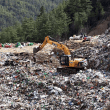
Bhutan’s waste challenge has grown steadily over the past decade. Rapid urbanisation, changing consumption patterns, and increased use of packaged products have led to rising volumes of household and commercial waste, particularly plastics. While the country has introduced plastic bans and other regulations in the past, landfills in several urban areas are approaching capacity, and illegal dumping remains a concern in some locations.
Officials involved in the new project say that technical support and institutional strengthening are essential to move beyond piecemeal solutions. One of the core objectives is to enhance DECC’s ability to plan, implement, and monitor waste management policies more effectively. This includes improving systems for collecting and analysing data on waste generation and composition — an area widely acknowledged as a current gap.
“Without reliable data, it is difficult to design the right interventions or measure progress,” said a project official. “We need to know how much waste is being produced, what types of materials dominate the waste stream, and where opportunities for recycling or reduction are greatest.”
A second component of the initiative will test and refine pilot recycling models in Thimphu and Paro. These pilots are expected to demonstrate practical approaches that can later be expanded to other parts of the country. They will explore partnerships with private companies, community groups, and informal waste collectors to create value chains for recyclable materials.
The third output focuses on documenting and sharing lessons learned, so that successful practices can inform national strategies and guide future investments.
Encouragingly, several Bhutanese organisations have already shown that waste can be transformed from a liability into an economic resource. The Bhutan Waste Bank has created platforms for buying and selling recyclables, while organisations such as Clean Bhutan and Green Roads have supported community-based collection, upcycling, and awareness programmes. These initiatives illustrate the potential for green jobs and small enterprises within a circular economy.
However, experts caution that isolated projects alone will not be enough. Scaling up recycling infrastructure, ensuring consistent segregation at source, and maintaining long-term behaviour change among households and businesses remain major challenges. Stronger coordination between government agencies, local governments, and the private sector will be critical.
The government has set an ambitious vision of moving toward zero waste by 2030. Achieving this goal, stakeholders say, will require sustained investment, supportive policies, and active participation from citizens.
The new JICA-DECC partnership is being viewed as a timely boost to these efforts — one that could help lay the foundation for a more resilient, resource-efficient waste management system across Bhutan.