


In a significant step toward inclusive sports development, Bhutan has begun introducing Boccia—a Paralympic sport designed for individuals with severe physical disabilities—into Special Educational Needs (SEN) schools across the country. The initiative aims to create more opportunities for students with disabilities to actively participate in sports and competition.
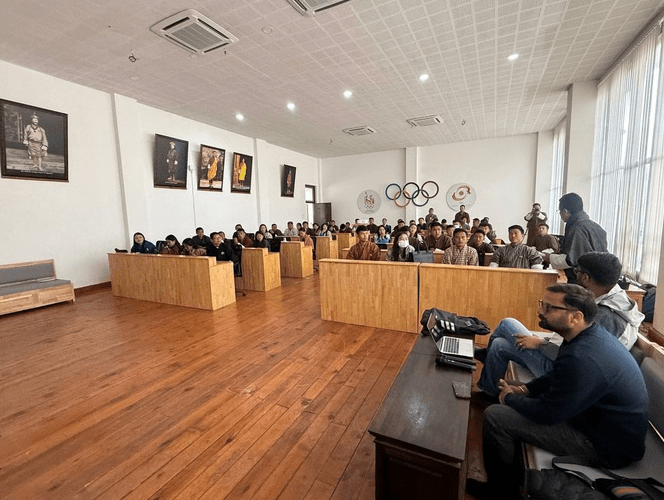
A three-day technical training programme currently underway in Thimphu marks the first phase of this nationwide effort. The training brings together educators and representatives from 24 SEN schools, equipping them with the knowledge and skills needed to introduce and promote the sport at the school level.
Boccia is a precision ball sport in which players aim to throw or roll colored balls as close as possible to a small white target ball known as the “jack.” Players can also strategically block or displace opponents’ balls, making the game both tactical and engaging. Points are awarded based on proximity to the jack, and the player or team with the highest score after several rounds is declared the winner.
Designed specifically for athletes with conditions such as cerebral palsy and other severe physical impairments, Boccia is played on a flat indoor court and emphasizes strategy as much as physical skill.
According to trainer Jaspreet Singh Dhaliwal, the sport offers both competitive and cognitive benefits. “Boccia is not only helpful for athletes interested in Paralympic sports, but it also serves as a mental game similar to chess. It can be introduced even at the primary school level, making it valuable for both individuals with disabilities and society as a whole,” he said.
For many educators attending the training, the programme represents a new and promising opportunity. Sonam Deley, a teacher from Tshenkharla Central School in Trashi Yangtse, expressed enthusiasm about the initiative. “This is my first time attending a Boccia training programme, and I am eager to learn as much as possible so I can implement it in my school,” she said.
Similarly, Geley Dema of Phuntsholing Rigsar Higher Secondary School emphasized the broader impact of the training. “I plan to take these skills back to my school and community to support our students. I also want to share what I learn with other coaches so we can grow sports together and ensure every athlete has the right to play,” she said.
To support the rollout, the Bhutan Paralympic Committee will provide each participating school with two sets of Boccia balls. This will enable schools to immediately begin introducing the sport to students.
The committee has also outlined plans to expand the programme to all SEN schools in the country in the next phase. Currently, Bhutan has 50 SEN schools serving more than 1,400 students.
As Boccia gains ground, it is expected to play a key role in strengthening Bhutan’s para-sports movement. More importantly, it promises to foster inclusion, confidence, and a sense of belonging among students with disabilities—ensuring they too have the opportunity to play, compete, and excel.


