


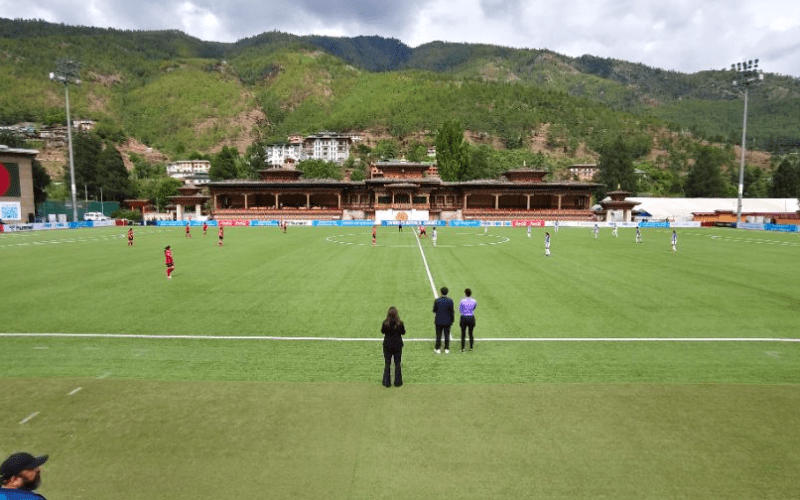
The 2026 edition of the BOB Bhutan National Women’s League began today in Thimphu, ushering in a revamped format that promises a more competitive and balanced season.
The opening day set an emphatic tone as defending champions RTC Women FC delivered a commanding performance, defeating last year’s runners-up Paro Women FC 8-0 at Changlimithang Stadium. The champions wasted little time asserting dominance, scoring within the first 10 minutes and netting six goals before halftime, before adding two more in the second half.
This year’s league introduces a three-stage structure for the first time, a significant departure from previous formats. In the initial Tier III phase, all 10 participating teams will compete against each other at Changlimithang Stadium. At the end of this stage, the top six teams will advance to Tier I of the Women’s National League 2026, while the remaining four teams will move to Tier II, also known as the National Championship.
According to the Bhutan Football Federation, the restructuring is aimed at narrowing the gap between stronger and weaker teams. Last season highlighted stark disparities, particularly when top-ranked sides faced lower-ranked opponents, often resulting in heavy defeats.
BFF media focal person Nidup Gyeltshen explained that the changes were necessary to address these imbalances. He noted that some teams conceded more than 40 goals over the course of the previous season, underscoring the need for a more competitive structure.
At the same time, Gyeltshen pointed out that matches among the top six teams were far more closely contested, frequently ending with narrow margins such as 2–1, 3–1, or 3–0. A similar pattern was observed among the lower-ranked teams, where contests were also relatively even. The new tiered system is expected to group teams of similar strength together as the competition progresses, maintaining competitiveness throughout the season.
In addition to structural changes, the federation has revised its foreign player policy. Clubs are now permitted to field up to eight foreign players—five international players and three from SAFF nations—up from six in the previous season. The move is expected to enhance squad depth and elevate the overall standard of play.
This year’s league also features a broader geographic representation, with teams participating from Thimphu, Phuentshogling, Punakha, and Gelephu. A new entrant, Tsirang WFC, adds fresh energy to the competition.
With a new format, expanded player options, and an increased focus on competitive balance, the 2026 season is poised to mark a significant step forward for women’s football in Bhutan.


