
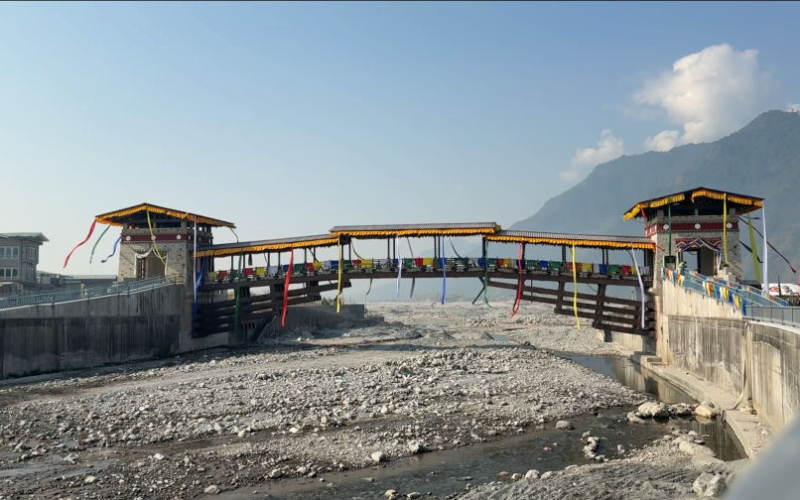
Phuentshogling marked a new milestone in its urban transformation with the inauguration of a steel arch pedestrian bazam spanning the Om Chhu, a structure that blends Bhutan’s traditional architectural identity with contemporary engineering solutions.
The newly opened bridge connects the town’s core area with the Phuentshogling Township Development Project (PTDP), providing a vital pedestrian link while also standing out as a visual landmark. Unlike conventional bazams, which typically rely on timber, this 44-metre-long bridge has been constructed entirely from steel, stone, and reinforced concrete—materials carefully selected to endure the hot, humid climate of southern Bhutan.
Project officials explained that adapting the traditional bazam concept to local environmental conditions required rethinking both design and materials. Wooden structures, commonly used in central and eastern Bhutan, are less suitable for the south due to faster deterioration. As a result, engineers opted for a fully non-wooden structure without compromising the distinctive Bhutanese aesthetic that defines a bazam.
The bridge forms an integral part of the wider PTDP initiative and plays a strategic role beyond simple connectivity. It links pedestrians directly to newly developed riverside walkways, among the first of their kind in the country, and serves as a welcoming feature for visitors entering the town. With Phuentshogling often being the first point of entry for tourists, the bazam has been designed to leave a strong and lasting impression.
Construction, however, was not without challenges. The project team faced hurdles ranging from sourcing appropriate materials and skilled craftsmanship to achieving the level of finishing required to meet both structural standards and traditional design expectations. Balancing modern engineering demands with cultural authenticity proved to be a complex task.
Funded by the Asian Development Bank, the bridge was built at a cost of nearly Nu 32 million. As it begins to serve residents and visitors alike, the steel arch bazam stands as a symbol of how Bhutan’s towns are evolving—honouring heritage while embracing innovation and sustainability in urban development.