

South Asia’s battle with dirty air is once again under the spotlight, as five neighbouring countries begin discussions on working together to tackle a problem that refuses to recognise political borders.
Bangladesh, Bhutan, India, Nepal and Pakistan — home to some of the world’s most polluted airsheds — are exploring coordinated strategies to curb air pollution that continues to endanger public health, strain economies and damage fragile ecosystems across the region.
Air pollution has long been a shared challenge in South Asia, driven by common sources such as crop residue burning, vehicle exhaust, coal-based power generation, unmanaged waste and the widespread use of polluting fuels for household cooking. While governments have introduced policies and programmes to address these issues, results have varied widely from country to country, prompting renewed calls for regional collaboration.
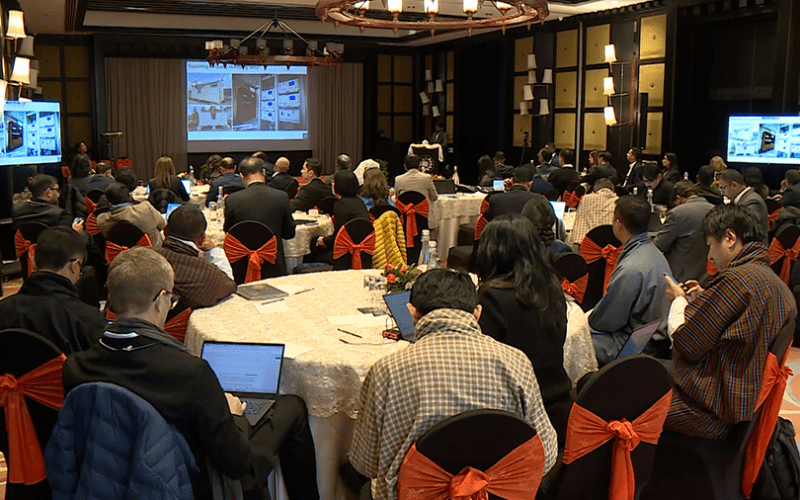
That call grew louder this week in Thimphu, where policymakers, scientists and finance experts gathered for the Third Regional Science, Policy and Finance Dialogue on Air Quality Management. The two-day meeting focused on practical solutions that could be scaled across borders, including the promotion of electric vehicles, a faster transition from coal to cleaner energy sources, improved waste collection and recycling systems, and tougher enforcement of environmental laws.
Participants also stressed the need for stronger emissions monitoring and better data sharing to understand how pollution travels across borders and where interventions can be most effective.
Pema Gyamtsho, director general of ICIMOD, said the aim of regional cooperation is not only to reduce pollution levels, but also to ease the heavy health and economic burdens associated with poor air quality.
“Through these efforts, we hope to reduce air pollution, the diseases it causes and the economic impacts within five to ten years,” he said. “Air pollution causes serious harm to the environment as well, and we want to address all these dimensions.”
He emphasised that cooperation across borders is essential, noting that pollution generated in one country often affects communities far beyond its source. “Air pollution is a transboundary issue,” he said. “Polluted air does not stop at national borders. The source may be in one place, but the impact is felt elsewhere. That is why countries need to work together and take an airshed-based approach.”
Experts at the dialogue warned that without collective action, individual national efforts will continue to fall short. Winds and weather patterns routinely carry pollutants across the Himalayas and plains, making unilateral solutions ineffective.
As South Asia grapples with rapid urbanisation, growing energy demands and the pressures of climate change, the message from Thimphu was clear: cleaner air will require shared responsibility. With polluted air ignoring borders, many believe that only united regional action can deliver a healthier future for the millions who breathe it every day.