


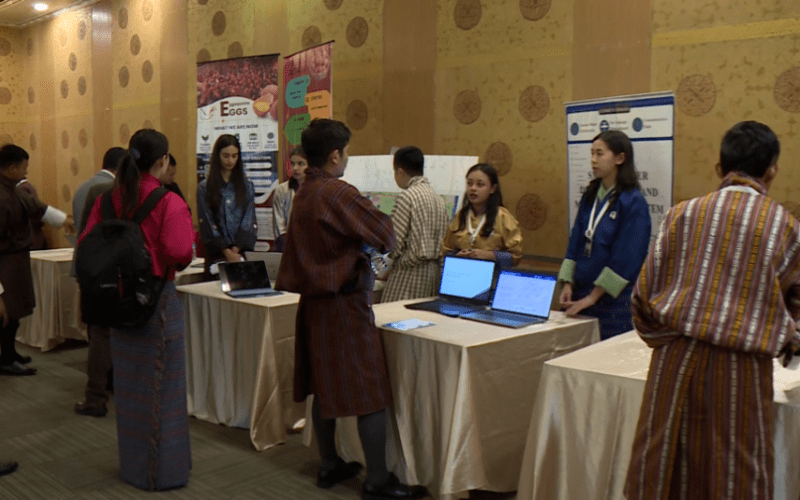
From strengthening local bamboo production to developing digital emergency response systems, young participants of the Pelsung programme have put forward a diverse range of ideas aimed at supporting the long-term development of Gelephu Mindfulness City (GMC).
Thirty project proposals were showcased during the pitching event of the third cohort of the programme, following an intensive three-month immersion in GMC. The participants, known as Pelsups, designed solutions based on challenges they observed firsthand while living and learning in the city.
Many of the proposals focused on sustainability, resource management, economic empowerment, and public safety, reflecting GMC’s broader vision of building a resilient and future-ready city.
One project highlighted the potential of Bhutan’s bamboo sector by proposing the establishment of bamboo nurseries and plantations in southern Bhutan. The initiative seeks to reduce the country’s dependence on imported bamboo while creating new livelihood opportunities for rural communities.
According to Pelsup Tshering Dorji of Team Quality Pakshing, Bhutan imported approximately 20 million kilograms of bamboo in 2023, valued at around USD 1.88 million. He said the team aims to develop a reliable domestic bamboo supply chain and collaborate with rural residents to generate additional income through bamboo cultivation.
Technology-driven public safety solutions also featured prominently among the presentations. Team Quick Mind: GMC Emergency Response introduced a mobile application designed to connect citizens with emergency services during critical situations such as snakebites, elephant encounters, floods, landslides, and road accidents.
Pelsup Nim Dorji explained that the application would allow users to send instant alerts to emergency control centres. Designed with visual graphics, the platform would be accessible even to people with limited literacy. Once activated, the system would share the user’s location with authorities, enabling faster assistance.
Addressing concerns over water management, another group proposed a Smart Water Distribution and Monitoring System aimed at modernising existing processes. The project seeks to replace manual and reactive management practices with a digital system capable of improving efficiency and resource allocation.
Pelsup Shreya Chhetri said the idea emerged from the team’s personal experiences with water supply challenges in Gelephu. She noted that the proposed system would help authorities manage water resources more proactively through real-time monitoring and data-driven decision-making.
Pelsung officials described the projects as practical examples of how young people can contribute to solving local challenges through innovation.
Executive Director of Pelsung, Phub Dorji, said the proposals were shaped by the participants’ close engagement with GMC over the past three months. Through exposure to strategic lectures and on-the-ground experiences, the Pelsups gained a deeper understanding of the city’s opportunities and challenges, allowing them to develop solutions grounded in local realities.
He added that the pitching event serves as an initial platform for presenting ideas, with future programmes expected to connect promising projects and prototypes with potential investors and partners.
As one of GMC’s flagship youth development initiatives, the Pelsung programme continues to foster leadership, entrepreneurship, and innovation among young Bhutanese. To date, 981 Pelsups have completed the programme, gaining skills in leadership, innovation, and policy implementation to support the transformation of Gelephu Mindfulness City.


