


The road to Merak climbs out of Trashigang through cloud forest so thick it swallows the switchbacks whole, and by the time the mist clears near ten thousand feet, the landscape has changed entirely — treeless, wind-scoured, dotted with stone houses and grazing yaks. This is Brokpa country, the far eastern corner of Bhutan where semi-nomadic herding communities have lived largely on their own terms for centuries, and where the roads only reached in the early 2000s. Tourists followed later still; the villages of Merak and Sakteng opened to visitors only in the 2010s, making this one of the last corners of the kingdom where the welcome still carries genuine, unrehearsed curiosity rather than practiced routine.
The Brokpa are ethnically and culturally distinct from the rest of Bhutan, their language and dress tracing back to Tibetan nomadic roots rather than the Ngalop culture that shapes Thimphu and the west. The most immediately striking marker is the hat: a felted, spider-like construction of five braided points and dangling tassels, woven from yak hair, designed with a practical logic — the tassels channel rain and snowmelt away from the face, a functional solution that has become, over generations, an unmistakable emblem of identity. Both men and women wear thick, sleeveless jackets of yak or sheep wool, dyed deep red or black, built for a climate that rarely softens.
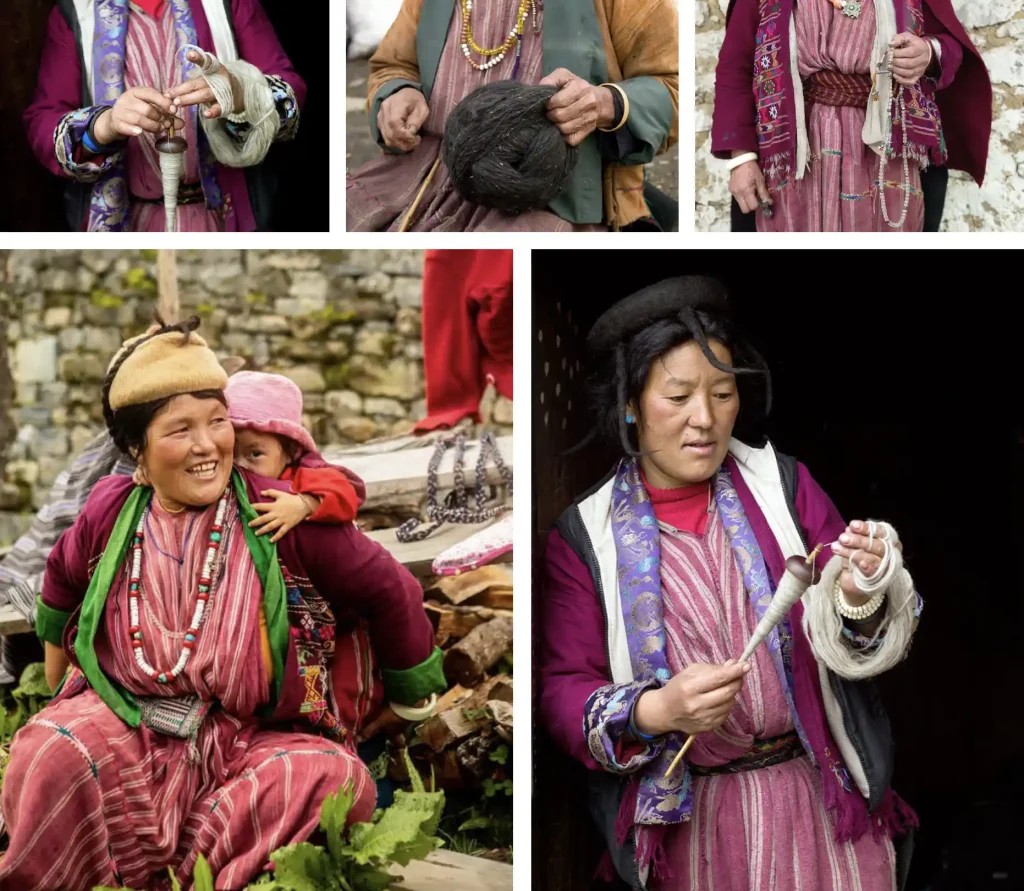
Life here still runs on a pastoral calendar. Families move seasonally with their yak herds between high summer pastures and lower winter shelters, a rhythm that predates the modern concept of Bhutan itself. Yak milk becomes butter and a hard, portable cheese; yak hair becomes tents, ropes, and those distinctive hats; yak dung, dried, becomes fuel for fires at an altitude where wood is scarce. Nothing about the economy here is symbolic — the animals are simply how people survive at eleven thousand feet.
Staying overnight in Merak, in a homestay rather than passing through, changes the register of the visit entirely. Evenings center on the hearth, where a family will offer ara, salted butter tea, and whatever the season provides, conversation moving slowly through a translator if you’re lucky enough to have one along. The Brokpa maintain their own festivals and religious practices, layered atop Buddhism with older animist threads still visible in local ritual, honoring mountain deities that predate any monastery.
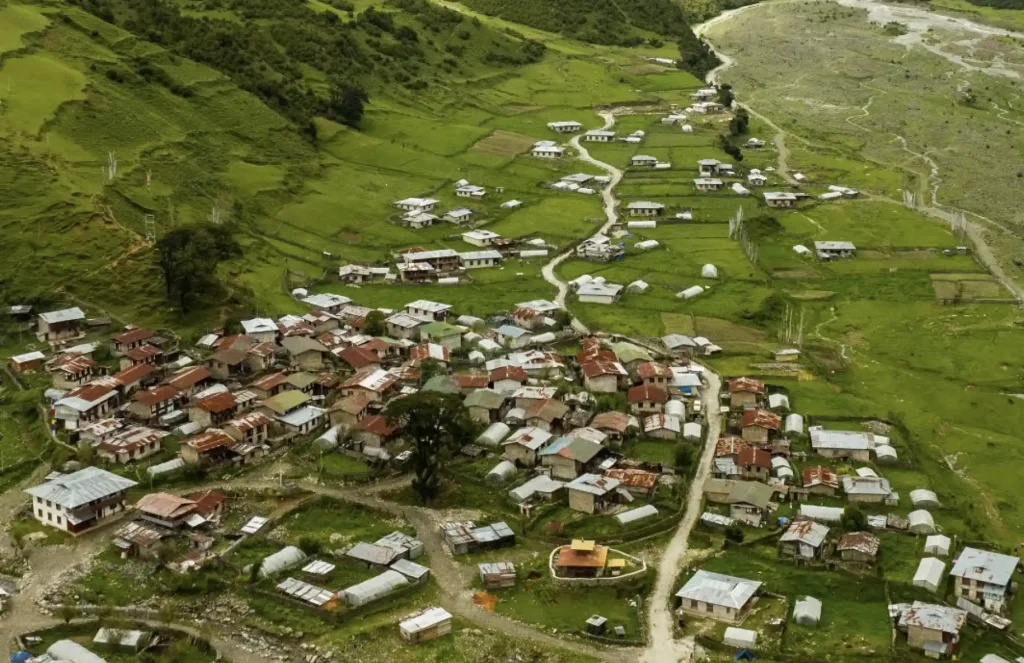
What makes the journey worthwhile isn’t spectacle — there is no single monument here, no dzong to photograph — but the rarer sensation of watching a genuinely self-sufficient culture continue, largely unbothered by the tourist economy reshaping much of the rest of the country. Merak and Sakteng offer something increasingly hard to find anywhere in the Himalayas: a community still defined entirely by its own needs, rather than anyone else’s expectations of it.


