Residents of Dagsa Chiwog under Gongdu Gewog in Monggar are finding it increasingly difficult to sustain Kharphu, a biennial community festival deeply rooted in local belief and tradition. Once a vibrant and regularly observed ritual, the festival today survives largely due to the determination of a few elders amid dwindling manpower, empty households, and a growing lack of interest among the youth.
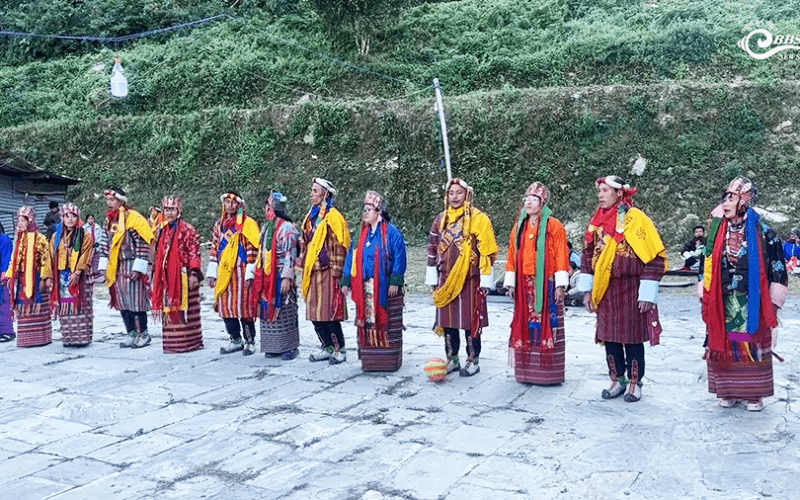
Kharphu is a three-day ritual practiced in several parts of Monggar to invoke local deities for the welfare of people, livestock, and agricultural harvests. In Dagsa, the celebration involves men and women believed to be descendants of the local deity. Dressed in colourful traditional attire, they proceed from the host household to the temple while chanting sacred verses and carrying offerings such as milk, butter, and cheese.
This year, concerns over whether the festival could be held at all prompted the gewog administration to issue an official notice urging community cooperation. The appeal helped mobilise enough participants to ensure the festival went ahead, but villagers say the challenges are far from over.
Elders worry that Kharphu, passed down orally through generations, may slowly disappear. Sixty-eight-year-old master chanter Tashi Tenzin, one of the few remaining custodians of the ritual chants, says the absence of apprentices poses the greatest threat.
“When we learned this culture from our elders, we simply followed what they did,” he said. “We never questioned the meaning, and they never explained it. Now they are gone, and we carry on with only limited knowledge. I fear this tradition may fade away. I am already old, and no one has come forward to learn what little I know.”
Organisers say manpower shortages are particularly acute among men, who are required to perform key ritual roles. According to Dagsa Tshogpa Pema Dema, at least eight trained men are needed, and they must undergo three days of preparation before the festival. “There is no wage during the training period, which discourages participation,” he said, adding that many young men prefer the elders to continue performing the rituals, citing a lack of knowledge and interest.
Local leaders say the challenges facing Kharphu reflect broader social changes. Gongdu Gup Tshewang Tobgyal noted that the festival was once held monthly, later reduced to an annual event, and eventually became biennial as circumstances changed. “Empty households and declining youth participation in cultural activities are the main issues today,” he said.
While the gewog office does not directly organise such events, officials are now looking to strengthen collaboration with chiwog leaders and communities to ensure traditional practices are preserved. “It is time for the chiwogs, with support from the gewog office, to take responsibility for sustaining these traditions,” the gup said.
Despite the difficulties, villagers remain firm that abandoning Kharphu is not an option. Gyembo, this year’s host of the festival, said the belief that misfortune could follow if the ritual is discontinued remains strong. “We cannot leave it because it is part of our ancestors’ culture,” he said. “Our economic situation has improved with road access and better opportunities, but manpower and youth disinterest remain our biggest challenges.”
For now, Kharphu endures through the faith and commitment of a shrinking group of elders. But community members acknowledge that belief alone may not secure its future. Without the involvement of younger generations, one of Monggar’s oldest living traditions risks becoming little more than a memory.