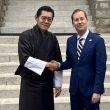




In a landmark move to strengthen bilateral ties and invigorate its export sector, Bhutan’s National Assembly today approved the long-awaited Free Trade Agreement (FTA) with Thailand. Following this endorsement, the pact will advance to the National Council for final ratification, paving the way for its January 2026 entry into force.
Under the accord, Bhutanese exporters will enjoy duty-free access to Thailand’s market, while Bangkok has pledged to eliminate tariffs on 94 percent of its 10,731 tariff lines. Bhutan, in turn, will lift duties on all 5,867 of its tariff lines—granting Thai products unfettered entry into the Bhutanese market.
Duty relief for key Bhutanese commodities
Once active, the FTA will slash current levies of 5–60 percent on a broad range of Bhutanese goods, including essential oils, cordyceps, apples, spices, honey, pickles, tea, alcoholic beverages and potatoes. Producers anticipate that zero-duty treatment will significantly boost competitiveness and spur higher export volumes.
Special agricultural quotas
To protect sensitive Thai agricultural sectors, the agreement carves out Country-Specific Quotas (CSQs) for 11 commodities. Bhutan will be entitled to duty-free exports of:
- 20,000 metric tonnes of potatoes
- 130 metric tonnes of garlic
- 250 metric tonnes of tea
- 10 metric tonnes of coffee
- 25 metric tonnes of trout
These quotas encompass 77 tariff lines and may be adjusted in line with Bhutan’s production growth and global demand.
Streamlined rules of origin
To further ease trade, 138 of the 165 products Bhutan proposed will now qualify for zero tariffs under a simplified 30 percent local-content threshold, down from stricter requirements. Emerging sectors such as ferro alloys will benefit from a reduced origin rule—from 40 percent to 30 percent—for seven key iron and steel items. In total, 131 products identified by Bhutan’s private sector as having high export potential will gain duty-free Thai market access.
Balancing trade and widening horizons
Bhutan’s trade deficit with Thailand has persisted for years. Officials expect the FTA to narrow this gap and leverage Thailand’s ASEAN membership to tap into wider regional markets. An embedded chapter on economic and technical cooperation spans renewable energy, education, investment, intellectual property and tourism, while a dispute settlement mechanism and an evolutionary clause lay the groundwork for future inclusion of services and investment.
Parliamentary perspectives
Chairperson of the Human Rights and Foreign Relations Committee, MP Damche Tenzin, hailed the agreement as “a catalyst for export growth, trade liberalization and deeper economic synergy.” He noted that the pact carries no fixed expiration—allowing both nations to renegotiate terms as circumstances evolve.
Yet some lawmakers urged caution. MP Tashi Tenzin of Radhi-Sakteng queried how the government would ensure consumers benefit from exemptions on nearly 5,900 imported Thai goods. “If illicit practices arise or buyers see no savings, what measures will we take?” he asked.
In response, Industry, Commerce and Employment Minister Namgyal Dorji affirmed that imports from Thailand will be exempt from customs duties, GST and excise taxes. He underscored the government’s commitment to robust implementation, with the Competition and Consumer Affairs Authority charged with oversight. “Contrary to concerns, this agreement will harmonize import levels with export growth,” he asserted.
Strategic outlook
As one of Bhutan’s top ten trading partners, Thailand’s deepening commercial engagement represents a strategic milestone. With expanded market access and new avenues for technical collaboration, the FTA sets a foundation not only for richer economic integration but also for sustained political and developmental cooperation between Thimphu and Bangkok.


