A week-long entrepreneurship boot camp aimed at preparing families affected by the Gelephu Mindfulness City (GMC) development concluded today, marking a significant step toward supporting communities transitioning into new urban livelihoods.
The programme, held in Gelephu, brought together 30 families whose land falls within the Gelephu International Airport project area. As the first phase of a broader Training and Skill Development Programme, the initiative seeks to help households adapt to changing economic realities and build sustainable income opportunities as GMC continues to expand.
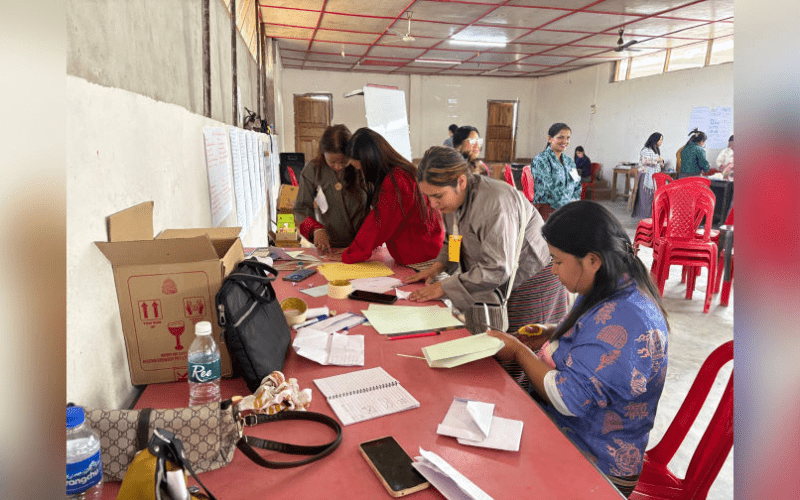
Participants, primarily from Samtenling gewog, spent five days exploring pathways beyond traditional subsistence farming. Through workshops and mentorship, families learned how to identify market needs within a rapidly developing city and translate them into viable business ventures.
Working in seven groups, attendees developed a diverse range of proposals tailored to the demands of an emerging urban environment. Ideas included an elderly care centre, delivery and logistics services, organic honey production, and innovative approaches to managing non-biodegradable waste. To strengthen their plans, the groups conducted post-market surveys within local communities, gathering feedback to assess feasibility and refine their concepts.
For many participants, the training offered a new perspective on entrepreneurship. Tshewang Pelden, a resident, said initial uncertainty about the programme quickly turned into optimism. “At first, we were worried about the training and wondered what it would be like and whether we would gain any knowledge from it,” Pelden said, adding that guidance from mentors helped participants learn essential business skills and boosted their confidence to pursue future ventures in GMC.
Another participant, Dawa Tshering Tamang, described the course as a valuable learning opportunity. “The five days of entrepreneurship training were very helpful for us. It provided a platform not only for families like ours but also for youth to understand business ideas and the skills needed to develop them,” Tamang said.
Beyond business planning, the boot camp included sessions on financial literacy, design thinking, and pitching concepts to potential investors. According to Samten Choden, programme officer with the Department of Employment and Entrepreneurship under the Ministry of Industry, Commerce and Employment (MoICE), the goal was to equip participants with practical tools to build sustainable livelihoods. “We aim to help them generate ideas, develop business management skills, and explore income opportunities that exist within their own communities,” Choden said.
Officials say the initiative reflects a broader vision to ensure that local residents benefit directly from the city’s growth. Addressing participants during the closing session, the GMC governor emphasized that the success of the project hinges on empowering those most affected by it. He noted that while the development is still in its early stages, its long-term ambitions are significant and designed to create unique opportunities for Bhutanese communities.
As GMC continues to take shape, organisers plan to expand similar training programmes, focusing on entrepreneurship and skills development to help families navigate the transition toward a more urban and diversified economy.