


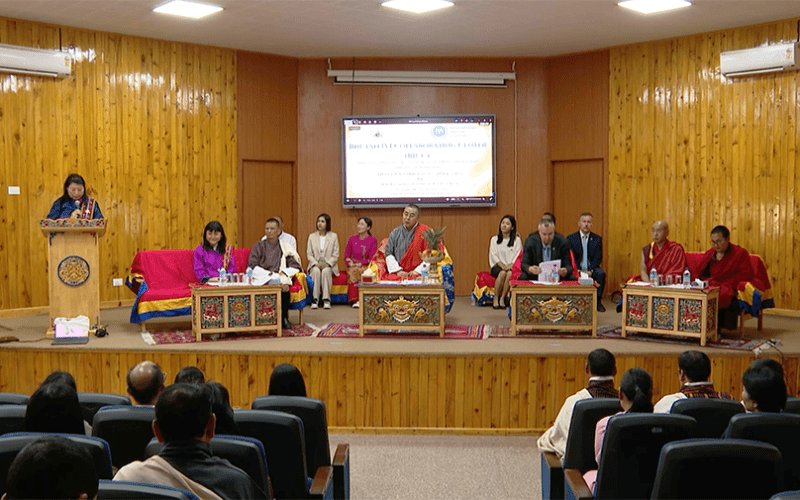
Bhutan has launched a new centre aimed at strengthening vaccine research and regional public health collaboration. The Bhutan IVI Collaborating Centre (BICC), established through a partnership between Bhutan’s Ministry of Health, the Khesar Gyalpo University of Medical Sciences (KGUMSB), and the International Vaccine Institute (IVI), will serve as a regional hub for infectious disease surveillance, vaccine development, and public health training.
Located on the KGUMSB campus in Thimphu, the BICC is designed to fill the critical gaps in pandemic preparedness that became apparent across South and Southeast Asia during the coronavirus crisis. With a focus on regional cooperation, the centre aims to facilitate faster, more effective responses to future public health emergencies by acting as a collaborative platform among neighbouring countries.
“The establishment of this IVI Centre will be beneficial, especially for the prevention of infectious and vaccine-preventable diseases,” said Rinxin Jamtsho, Director of the Medical Education and Research Centre for Innovation and Technology at KGUMSB. “Once we have this centre, we can conduct research more easily, identify which vaccines we need, and arrange imports quickly.”
Modelled after successful WHO Collaborating Centres and IVI’s own regional coordination frameworks in West Africa, the BICC positions Bhutan as a strategic player in strengthening regional health security. The IVI will support the centre with technical expertise, access to global research networks, and international training opportunities for Bhutanese health professionals.
Dr. Florian Marks, Deputy Director General of IVI, highlighted the importance of cross-border collaboration: “Small countries are probably much stronger together. When integrated into a network of countries, with a centre here liaising with partners in Africa and beyond, it will create more research opportunities, increase Bhutan’s visibility, and enhance training and preparedness for future pandemics.”
As the global community moves beyond the acute phase of COVID-19 and looks ahead to emerging threats, the BICC stands as a symbol of Bhutan’s proactive approach to regional health cooperation. It signals a broader shift toward a more resilient and united response to the challenges of tomorrow.


