


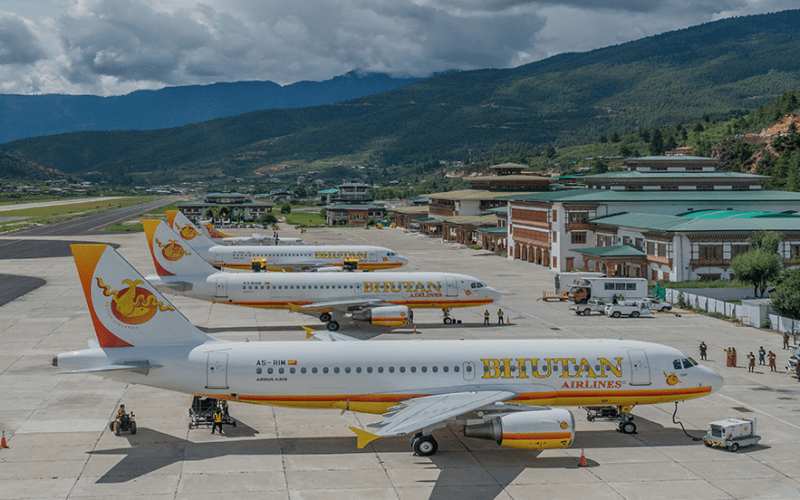
Bhutan’s tourism industry experienced a year of gradual revival during the Wood Female Snake Year, as visitor numbers rose and new initiatives aimed to reshape the country’s global appeal. While the growth signaled renewed momentum after pandemic-era disruptions, the sector has yet to regain the heights it once enjoyed.
Official figures show that Bhutan welcomed more than 209,000 tourists in 2025, generating over USD 43 million in revenue. The increase reflects growing international confidence in the Himalayan kingdom as a travel destination, but stakeholders note that overall arrivals remain below pre-pandemic benchmarks, underscoring the long road to full recovery.
In an effort to stimulate demand, the government introduced a series of policy adjustments, including waivers on the Sustainable Development Fee (SDF) for meetings, incentives, conferences and exhibitions (MICE) events. Financial relief measures were also extended to struggling hotels. These steps drew mixed responses across the industry: while some operators welcomed the support as essential to survival, others questioned whether intervention could distort market dynamics.
The debate over how best to steer tourism’s future has intensified. Some experts argue that Bhutan must stay committed to its long-standing “high-value, low-impact” philosophy, prioritizing quality over quantity to protect its environment and cultural heritage. Others believe a more flexible approach is necessary to remain competitive in a rapidly changing global market.
Meanwhile, the country is diversifying its tourism offerings. New wellness programs, spiritual retreats, and eco-tourism experiences are being promoted to attract visitors seeking meaningful travel rather than mass tourism. Authorities have also stepped up international outreach through investment forums and high-profile events designed to boost Bhutan’s visibility abroad.
Despite these efforts, recovery has been uneven. Tour operators report that most business continues to cluster in western regions, where established infrastructure and iconic attractions draw the bulk of travelers. Eastern and central areas, though rich in cultural and natural assets, have struggled to capture the same level of attention.
Looking ahead, industry leaders say Bhutan faces a delicate balancing act. Maintaining exclusivity while making travel more accessible could determine how successfully the country adapts to shifting market realities. As global tourism trends evolve, Bhutan’s challenge will be to sustain growth without compromising the principles that have long defined its unique approach to travel.


