


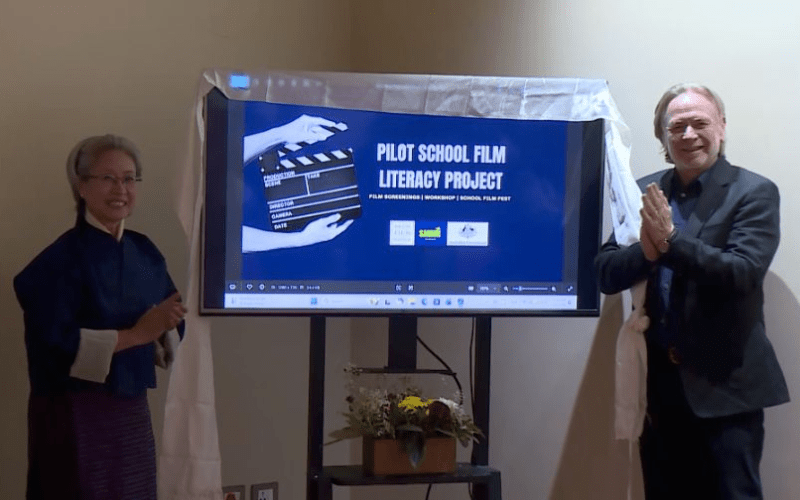
For generations of young Bhutanese students, films have largely remained weekend entertainment — a colourful escape filled with action, romance, or animation. But a new pilot programme in Thimphu is challenging that limited view. Launched as a six-month film literacy and awareness initiative, the project aims to transform cinema from mere distraction into a powerful medium for learning, creative expression, and even professional aspiration.
Organised for school students in the capital, the programme introduces participants to the full spectrum of filmmaking. Through structured workshops, students will explore storytelling techniques, scriptwriting fundamentals, basic cinematography, and editing. Importantly, the curriculum goes beyond technical skills. Sessions on copyright laws and ethical content creation will teach young minds about intellectual property rights and responsible digital citizenship in an age where anyone with a smartphone can become a content creator.
Organisers hope the initiative will deepen students’ appreciation of films as cultural and social tools. “Watching a film will no longer be just about following a story on screen,” said a programme coordinator. “It will also mean understanding how stories are constructed, how images and sound influence emotions, and how cinema mirrors — and shapes — society.” Students will analyse how films reflect Bhutanese values, environmental concerns, and changing social realities, turning passive viewers into critical thinkers.
The programme also highlights filmmaking as a viable career path. Bhutan’s film industry, though modest, has grown in recent years with local productions gaining regional attention. By exposing students early to concepts like visual narrative, audience engagement, and production ethics, the initiative seeks to nurture the next generation of directors, writers, cinematographers, and producers. Practical exercises, including short film projects, will give participants hands-on experience, building confidence and creativity.
Beyond individual growth, the project carries wider significance. In a digital era dominated by short-form videos and global streaming platforms, media literacy has become essential. Teaching students to create thoughtfully and consume critically can help counter misinformation and promote cultural preservation. Bhutan’s rich tradition of storytelling through folk tales and monastic arts finds a natural extension in modern cinema.
As the six-month pilot unfolds, early feedback from participating students has been encouraging. Many report newfound respect for the effort behind every frame they once took for granted. If successful, the programme could expand to other dzongkhags, embedding film education into Bhutan’s school curriculum.
In Thimphu’s classrooms today, a quiet revolution is brewing — one where the silver screen becomes both a mirror to society and a window to future careers. For these young Bhutanese, the lights are dimming on passive entertainment and rising on active creation.


