


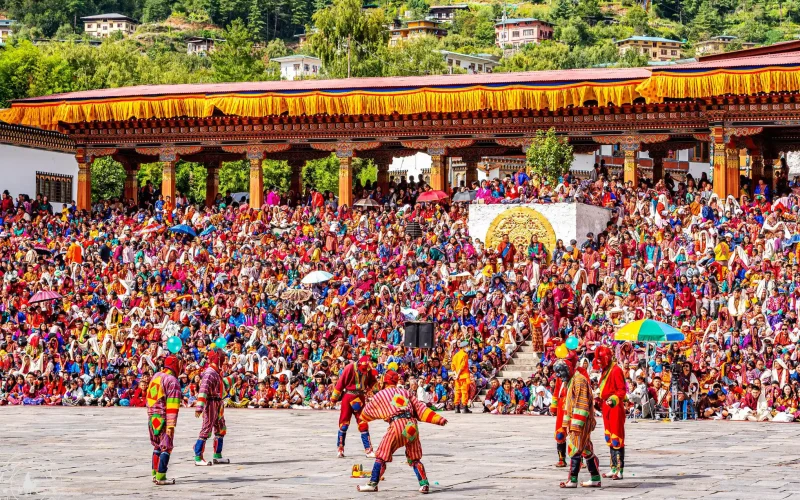
In Bhutan, festivals are not performances staged for an audience—they are acts of devotion lived collectively. Known as tsechus, these annual gatherings transform imposing fortress monasteries into vibrant spaces where faith, art, and community converge in a spectacle that is both deeply spiritual and visually arresting.
At dawn in Paro or Thimphu, the courtyards of dzongs begin to fill. Families arrive dressed in their finest gho and kira, their garments alive with colour and intricate patterns. Elders settle into quiet corners, prayer beads in hand, while children weave through the gathering crowds with unrestrained excitement. The air is cool, laced with the scent of incense and earth, carrying a sense of anticipation that builds steadily through the morning.
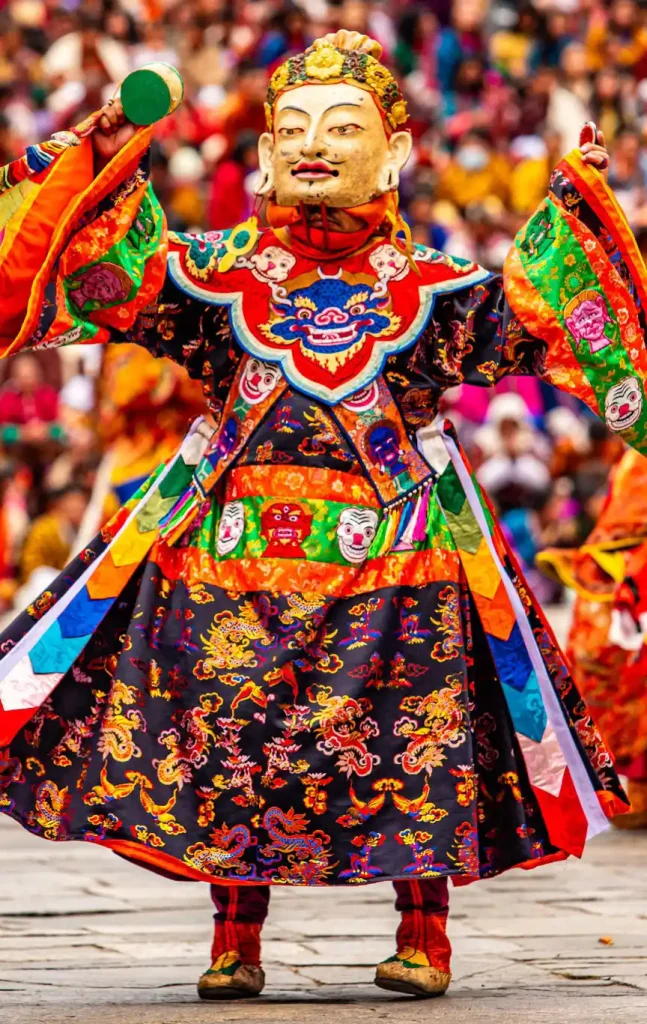
When the dances begin, the atmosphere shifts. Masked performers—monks and trained laymen—enter the courtyard with measured steps, their movements precise and deliberate. Their costumes are elaborate, layered with brocade and symbolism, while their masks represent deities, protectors, and moral archetypes. Each gesture is intentional, each sequence part of a narrative rooted in Buddhist teachings. Through these dances, stories of enlightenment, compassion, and the triumph of good over evil are retold in a language that transcends words.
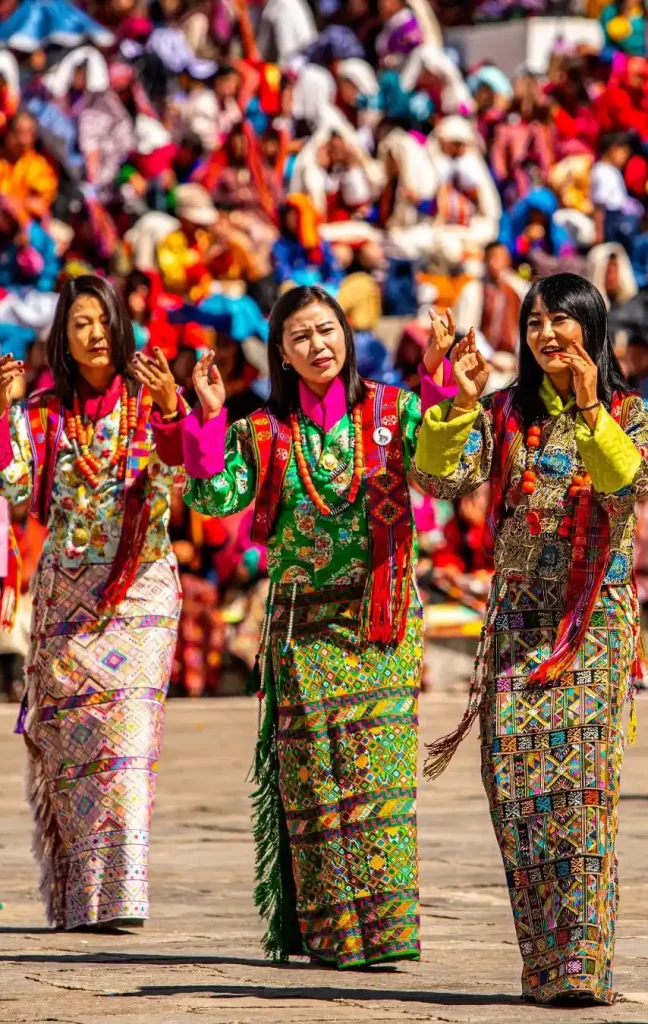
The soundscape is immersive. Drums beat in steady, hypnotic rhythms, cymbals clash with sharp resonance, and long horns send deep, echoing notes across the valley. The performance is not meant to entertain in the conventional sense—it is meant to bless, to purify, to remind.
Among the most powerful moments of any tsechu is the unveiling of the thongdrel, a vast sacred tapestry unfurled at dawn on the festival’s final day. Towering over the courtyard, it depicts revered spiritual figures in intricate detail. For a brief window, devotees gather to witness it, believing that a single glimpse can cleanse a lifetime of sins. The silence that accompanies its unveiling is profound, filled with reverence and quiet awe.
Yet beyond the ritual, tsechus are deeply social events. Families picnic under open skies, sharing home-cooked meals and stories. Old friends reconnect, and new bonds are formed. The sacred and the everyday exist side by side, inseparable and harmonious.
For travellers, the experience is immersive but humbling. There is no performance tailored for outsiders, no translation of meaning into digestible fragments. Visitors are welcomed not as spectators, but as witnesses to a living tradition. A shared smile, an offered cup of tea, or a brief exchange becomes part of the experience.
As the sun dips and the final dances conclude, the courtyards begin to empty. What lingers is not just the memory of colour and movement, but a deeper sense of having encountered something authentic—an enduring tradition that continues, unchanged in spirit, at the heart of Bhutanese life.


