


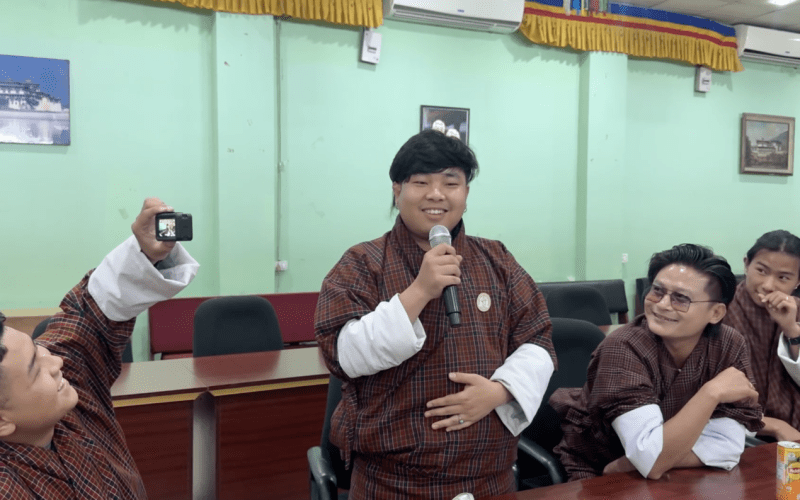
A growing number of young Bhutanese are transforming their creativity into careers through digital content creation, using platforms such as TikTok, YouTube, Facebook, and Instagram to reach audiences far beyond the country’s borders. While the rise of social media has opened up new opportunities, earning a sustainable income from online content remains a challenge for many.
Among those making a mark in the digital space is 23-year-old Sangay Wangchuk, popularly known to his followers as AKA Changzey. Through humorous videos and relatable storytelling, he has built a loyal audience on TikTok and YouTube, turning everyday experiences into entertainment that resonates with viewers.
Sangay’s path to success was far from conventional. Having left school after Class Five, he once imagined spending his life in the village driving a pickup truck. However, his passion for entertaining people and making them laugh never faded. What began as a hobby eventually evolved into a profession, allowing him to earn a living through content creation.
“I may not have received much formal education, but I believe anyone can achieve their goals if they remain committed to their passions,” Sangay said. “I have always enjoyed singing and creating content, and nothing makes me happier than bringing laughter to people.”
His story reflects a broader trend among Bhutanese youth, many of whom are increasingly viewing content creation as a viable career option. Yet, despite the growing popularity of digital platforms, creators continue to face obstacles, particularly when it comes to monetising their work.
To help address these challenges, a five-day training programme on live streaming and digital content creation was recently conducted in Phuentshogling. The workshop aimed to equip creators with practical knowledge on content monetisation, audience engagement, and platform-specific growth strategies.
Participants said the programme provided valuable insights into generating income through platforms such as TikTok, Facebook, and YouTube.
“Before the workshop, many of us were unfamiliar with the different ways creators could monetise their content,” said content creator Namgay Wangchuk. “We learned how to engage audiences effectively, analyse content performance, and improve the reach of our videos.”
Another participant, Dawa Tshering, said the training helped creators better understand key aspects of digital success, including when to post content, how to identify target audiences, and the strategies required to build sustainable online careers.
“Monetisation has been one of the biggest challenges for creators in Bhutan,” he said. “The training gave us a clearer understanding of how to overcome some of these limitations and make better use of available opportunities.”
The programme was supported by the Copyright and Creative Industry Promotion Division as part of the government’s Economic Stimulus Programme, which seeks to strengthen Bhutan’s creative industries and create new economic opportunities for young people.
According to organisers, the workshop focused not only on monetisation but also on helping creators understand audience behaviour and maximise the potential of digital platforms.
“One of our key objectives is to teach content creators how to generate income from their work while also improving their ability to identify, target, and engage audiences,” said Kinley Tshering, a support organiser. “Ultimately, the programme is about upskilling young people and enabling them to use digital platforms as tools for both creativity and economic growth.”
As Bhutan’s digital landscape continues to evolve, initiatives such as these are helping young creators bridge the gap between passion and profession. For many, social media is no longer just a space for entertainment—it is becoming a platform for entrepreneurship, innovation, and livelihood.


