


As dawn breaks over Kuenselphodrang, the sacred grounds are still quiet. Before the first devotees arrive to receive teachings and blessings, another ritual is already underway—one of service, discipline, and quiet devotion.
For the hundreds of volunteers working behind the scenes, the month-long empowerment is not only about listening to spiritual teachings but also about putting compassion into action.
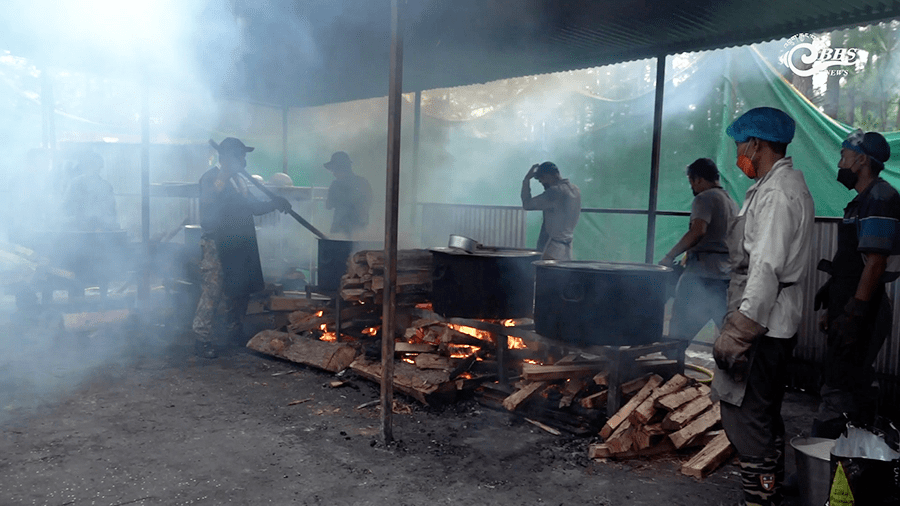
Each morning, long before sunrise, nearly 45 retired army personnel and seven staff members from the Yusipang National Centre for Organic Agriculture report for duty in the massive community kitchens. Over traditional firewood stoves, they begin preparing tea, rice, and curry that will feed close to 25,000 devotees on weekdays and more than 30,000 during weekends.
The task is enormous. Hours of cooking, constant coordination, and unwavering teamwork are needed to ensure that every meal reaches those attending the empowerment. Yet the volunteers see the demanding work as a privilege rather than a burden.
Veteran army cook Dophu said serving such a large number of people is a blessing in itself.
“Even serving a few hundred people is considered meaningful. Having the opportunity to prepare meals for over 30,000 devotees gives us immense joy and a deep sense of fulfilment,” he said.
The kitchens are supported by another dedicated team working out of public view. Fifty-nine women volunteers, wives of army personnel from Lungtenphu, spend hours peeling, washing, and cutting vegetables to keep the cooking operation running smoothly. Their work may go unnoticed by many, but it forms the backbone of the daily meals.
Once the food is ready, De-Suups and monks step in to distribute tea, rice, and curry to the thousands gathered on the grounds. Their coordinated efforts allow the massive congregation to be served efficiently without disrupting the programme.
Beyond the kitchens and serving lines, another group of volunteers focuses on maintaining cleanliness throughout the venue. Thirty-seven volunteers work throughout the day cleaning tents, collecting waste, and ensuring the toilets remain hygienic despite constant use by thousands of visitors.
For Kinley, who volunteers with the sanitation team, keeping the sacred site clean is itself an act of devotion.
“We clean with sincerity and from the depths of our hearts. Looking after this sacred place gives us purpose and inspires us to continue serving,” Kinley said.
Among the waste management volunteers is Dawa Tshering, who believes volunteering offers a unique opportunity to combine physical service with spiritual practice.
“While working, I can continue listening to the teachings. I believe that serving in this way allows me to accumulate merit, which is why I chose to volunteer,” Dawa Tshering said.
Coordinating the teams responsible for water, sanitation, and hygiene is Kinley Penjor, who credits the volunteers’ commitment for the noticeable improvement in cleanliness at the venue.
“They are ready to serve regardless of the hour. The standards of cleanliness have improved significantly, and we remain committed to maintaining them throughout the event,” he said.
While thousands arrive each day seeking spiritual guidance, the empowerment is sustained by countless acts of generosity carried out behind the scenes. Whether preparing meals before sunrise, serving food to the crowds, or quietly cleaning the grounds, the volunteers embody the teachings through action—demonstrating that service, offered with humility and compassion, can itself become a path to spiritual fulfilment.


