


Every international visitor to Bhutan pays a government levy of one hundred dollars for each night in the country — a Sustainable Development Fee that funds free healthcare and education, environmental conservation, and cultural preservation, deposited directly into the national treasury rather than routed through any tour operator. It is, without much competition, the most explicit price tag any country has ever attached to the privilege of visiting it.
The fee has a history that tracks Bhutan’s broader ambivalence about opening itself to the world. Tourism only began in 1974, and for decades the kingdom operated a minimum daily package that bundled accommodation, meals, transport, and a flat development fee into one number, keeping independent budget travel essentially impossible. In 2022, the government scrapped that bundled system in favor of the current standalone fee, initially set at two hundred dollars a night — a figure so steep that visitor numbers cratered, prompting a reduction to the current hundred-dollar rate in 2023, where it remains fixed through August 2027.
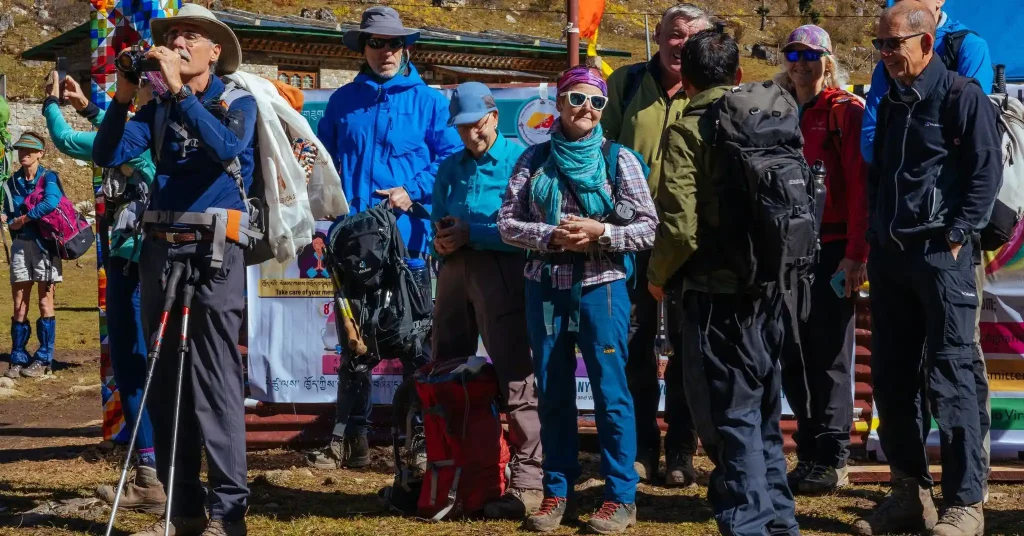
The policy sits atop a phrase that has become something between a slogan and a genuine governing philosophy: “high value, low volume” tourism. The logic is unambiguous — Bhutan does not want mass tourism, does not want the terraced hillsides of a destination optimized for footfall, and is willing to sacrifice visitor numbers, and the revenue that comes with them, to avoid it. Every tourist, in effect, is being asked to fund the country’s development directly, rather than simply pass through it.
Critics, including within Bhutan’s own tourism industry, have argued the fee prices out precisely the kind of curious, culturally engaged, lower-budget traveller the country might most want — backpackers, students, young researchers — in favor of a narrower band of wealthier visitors who can absorb the cost without much friction. Guides and small operators in Paro and Thimphu, several of whom lost income during the pandemic-era border closures and the subsequent slow recovery under the two-hundred-dollar rate, have been candid that the policy is a genuine gamble, not an uncomplicated triumph.
And yet, walking the ridgelines above Paro or the market stalls of Thimphu, the wager’s logic is visible in what’s absent: no queues snaking toward Taktsang, no strip of souvenir shops shouting over one another, no sense of a place performing itself for cameras. Bhutan remains, almost uniquely among Himalayan destinations, a country you experience at its own pace rather than a schedule dictated by crowd management.
Whether the fee model survives in its current form past 2027 is genuinely uncertain — Bhutan’s government has adjusted it twice already in response to visitor numbers and economic pressure, and further recalibration seems likely rather than exceptional. What seems more durable is the underlying instinct: that a small kingdom wedged between two of the world’s most populous nations has decided, deliberately, that its landscape and culture are not commodities to be scaled, but a finite inheritance to be metered out carefully, one visitor, one night, one hundred dollars at a time.
For the traveller willing to pay it, the return on that investment is not measured in convenience or bargains, but in something rarer: the distinct, slightly unsettling sensation of visiting a place that has not yet fully arranged itself around your arrival.


