


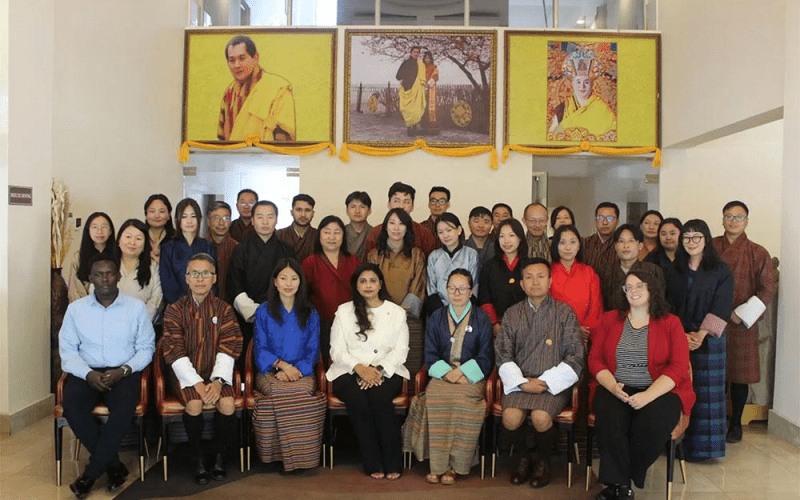
Bhutan has become the first country in Asia-Pacific to launch the pilot phase of the United Nations Development Programme’s (UNDP) Care Georeferencing Tool (CGT). The initiative, rolled out in Thimphu Thromde, marks a significant step toward data-driven policymaking in care services.
The Care Georeferencing Tool functions like a “Google Maps for care,” using geospatial analysis to map the supply and demand of care services across territories. Developed by UNDP’s Gender Team, originally in Latin America and the Caribbean, the tool visualizes “care deserts”—areas where the need for services far exceeds availability. It integrates data on populations requiring care, such as children, the elderly, and persons with disabilities, alongside existing facilities like childcare centers, health clinics, and eldercare services.
This pilot is particularly relevant for Bhutan, where women and girls spend approximately 2.5 times more time on unpaid care and domestic work than men. This burden limits women’s participation in the formal economy, education, and leadership roles. By providing precise, location-based evidence, the CGT will help policymakers identify gaps, allocate resources efficiently, and design more equitable care systems that recognize and reduce unpaid care work.
The launch aligns with Bhutan’s broader commitment to inclusive development and Gross National Happiness principles, which emphasize well-being beyond economic growth. It also addresses emerging challenges such as an ageing population, urbanization, and the impacts of climate change on care infrastructure. Natural disasters and environmental shifts can disrupt care services, making resilient, mapped systems essential for disaster preparedness and response.
UNDP officials highlight that the tool enables cross-sectoral coordination between health, education, social welfare, and urban planning departments. In Thimphu, the pilot will collect and georeference local data through community consultations and digital mapping, creating a scalable model for other dzongkhags.
Globally, demand for care services is rising due to demographic shifts and increasing female workforce participation. Bhutan’s leadership in adopting the CGT positions it as a model for the Asia-Pacific region, where many countries face similar care deficits. Successful implementation could inspire neighboring nations to adopt similar innovations, fostering regional collaboration on gender equality and social protection.
As the pilot progresses, results from Thimphu are expected to inform national care policies. Bhutan’s proactive approach not only advances gender equality but also builds more responsive, sustainable care ecosystems capable of adapting to future needs. This initiative underscores the power of innovative digital tools in transforming social policy and promoting human-centered development.


