


A five-day international programme equips Bhutanese legal and policy professionals with critical tools to navigate the country’s evolving energy landscape.
As Bhutan continues to strengthen its position as a regional leader in clean energy and sustainable development, a delegation of Bhutanese legal and policy professionals has completed an intensive international training programme on Energy Security: Law and Policy at the National Law School of India University (NLSIU), Bengaluru.
Organised by NLSIU’s Centre for Environmental Law, Education, Research and Advocacy (CEERA) in collaboration with its Professional and Continuing Education (PACE) Department, the programme was held from 17 to 21 June 2026 in association with the Department of Energy, Ministry of Energy and Natural Resources, Royal Government of Bhutan.
The programme brought together officials from several key Bhutanese institutions, reflecting the cross-sectoral nature of energy governance. Participants represented the Ministry of Energy and Natural Resources, Bhutan Power Corporation Limited, the Ministry of Finance, the Alternative Dispute Resolution Secretariat, the Centre Legal Service Division, and the Jigme Singye Wangchuck School of Law. The delegation included senior officials such as the Secretary General, Chief Legal Officer, Legal Officers, and faculty members engaged in legal education and public policy.
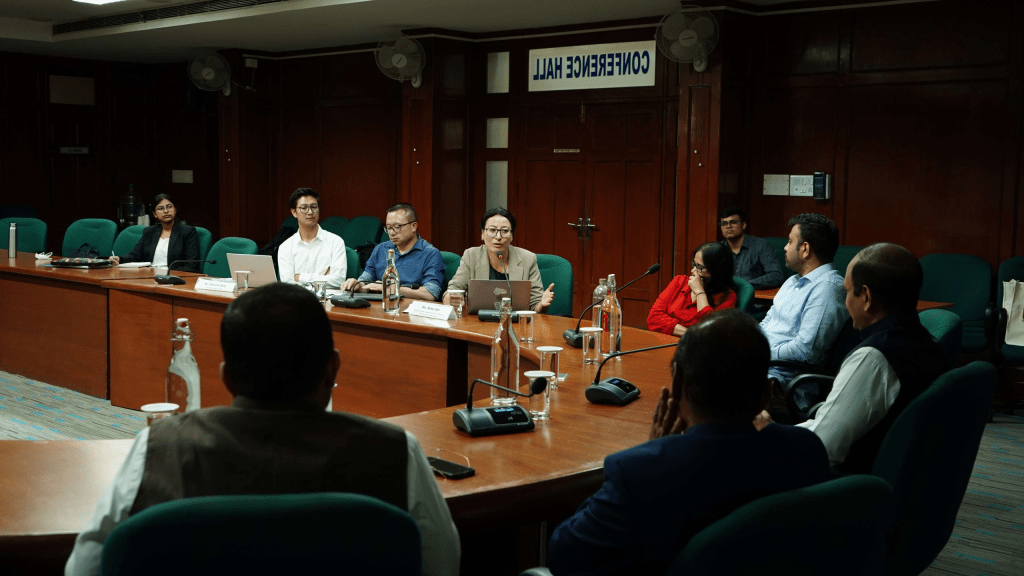
With Bhutan’s energy sector undergoing rapid transformation amid changing regional markets, climate commitments, and technological advancements, the programme focused on strengthening institutional understanding of the legal and regulatory frameworks that underpin long-term energy security.
Over five days, participants explored a broad range of contemporary issues, including energy law and governance, energy transition, climate change and energy security, international energy markets, electricity regulation, renewable energy governance, public policy in hydrocarbons, nuclear energy, consumer rights, energy dispute resolution, environmental, social and governance (ESG) frameworks, energy credit markets, and energy conservation.
The sessions were delivered by leading academics, legal practitioners, industry experts, and policy professionals from across India. Among the faculty was Prof. (Dr.) Sairam Bhat, Professor of Law at NLSIU, alongside specialists with extensive experience in energy regulation, environmental governance, and public policy.
For Bhutan, where hydropower has long formed the backbone of the national economy, the programme comes at an important time. As the country seeks to diversify its energy portfolio, strengthen domestic energy resilience, and respond to emerging global challenges such as climate change and evolving energy markets, building legal and policy capacity has become increasingly important.
The training also provided a valuable platform for dialogue and knowledge exchange between Bhutanese and Indian experts, enabling participants to examine international best practices while reflecting on their relevance to Bhutan’s unique development priorities and environmental commitments.
The initiative underscores the growing importance of regional collaboration in addressing shared energy challenges. By investing in professional development and strengthening institutional expertise, Bhutan continues to reinforce its commitment to evidence-based policymaking and sustainable energy governance.
The successful completion of the programme represents another step in deepening academic and policy cooperation between Bhutan and India, while equipping Bhutanese institutions with the knowledge needed to navigate the increasingly complex legal and regulatory dimensions of energy security.


