


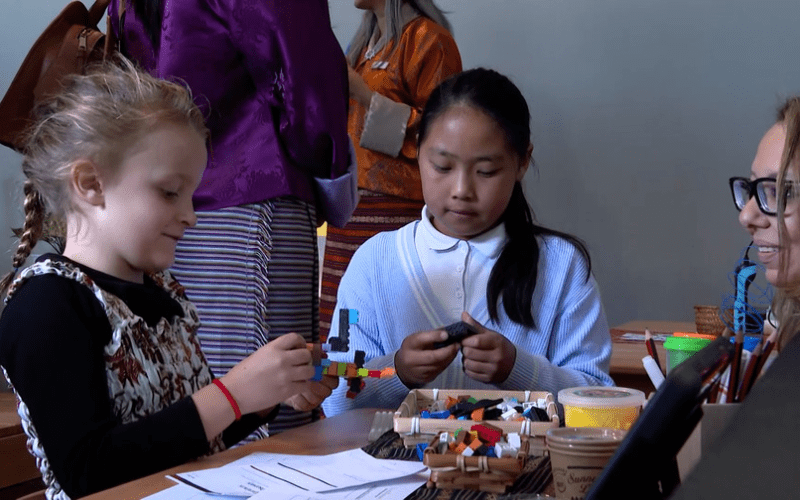
Parents and children in the capital were given an early look at Bhutan’s first international school during a special experience day hosted by EtonHouse Bhutan International School this week.
The event attracted more than 30 families eager to learn about the school’s educational philosophy, academic programmes, and vision ahead of its official opening in August. Through interactive sessions, curriculum presentations, and discussions with educators, parents gained insight into how students will be taught from early childhood through pre-university levels.
The school showcased a learning model designed to blend internationally recognised academic standards with Bhutanese values and culture. Representatives explained that children in the early years programme, aged three to six, will learn through the Reggio Emilia approach, an educational philosophy that encourages exploration, creativity, and collaboration. Rather than relying on rigid schedules, the approach places children’s interests and curiosity at the centre of the learning process.
For primary students between the ages of six and eleven, the curriculum will combine the International Primary Curriculum with Singapore Mathematics. School leaders said the programme aims to strengthen inquiry-based learning while fostering creativity and problem-solving abilities.
Older students will follow internationally accredited pathways. Those aged 11 to 16 will study under the Cambridge Lower Secondary Curriculum and Cambridge IGCSE framework, qualifications recognised by educational institutions worldwide. Students in the final two years of secondary school will have the opportunity to pursue Cambridge International A-Levels, preparing them for higher education through advanced subject study and critical thinking development.
Speaking during the event, Evelyn Tay, Chief Executive Officer of EtonHouse Bhutan International School, said the experience day was designed to help families understand the school beyond its facilities.
“The opportunity allows parents and students to experience how learning takes place, how children are encouraged to question, discover and engage with the world around them. These experiences reflect the core of the EtonHouse approach to education,” she said.
Language development will form a key pillar of the school’s academic programme. Alongside English, which will be used to build communication and literacy skills, Dzongkha will remain an important part of students’ learning experience. Mandarin will also be offered, giving learners exposure to an additional international language from an early age.
According to school officials, the institution seeks to support Bhutan’s aspirations of developing globally competitive talent while remaining rooted in national identity, cultural values and the principles of Gross National Happiness.
The launch marks the arrival of the EtonHouse International Education Group in Bhutan. The Singapore-headquartered organisation operates around 100 campuses across eight countries and serves approximately 18,000 students worldwide.
EtonHouse Bhutan International School is scheduled to begin classes in August, coinciding with the opening of a new EtonHouse campus in Thailand, expanding the group’s presence across Asia.


