


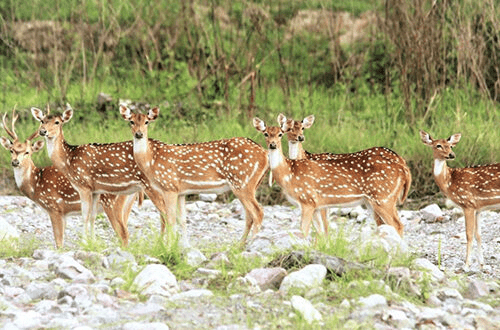
Bhutan’s tourism story has long been told through monasteries, mountain passes and its measured approach to high-value travel. That story is compelling, but incomplete. The country’s forests, wetlands and alpine grasslands deserve to become a carefully designed second pillar of the visitor economy—not as crowded spectacles, but as living classrooms that reward patience, local knowledge and conservation. A six-site wildlife circuit could give travellers a reason to stay longer, travel more widely and spend more directly in rural communities.
Start with Royal Manas National Park, where subtropical forests and rivers can anchor low-impact safaris and birding. Link it to Phrumsengla National Park, a dramatic elevational journey for walkers and wildlife watchers. Add Jigme Singye Wangchuck National Park, whose broad landscapes invite community-guided treks; Jigme Dorji National Park, a gateway to high Himalayan ecology; Wangchuck Centennial National Park, with its remote alpine character; and Sakteng Wildlife Sanctuary, where culture and nature are inseparable. Together, these places show Bhutan not as one postcard, but as an ecological continuum.
The idea should not be to build a wildlife-tourism conveyor belt. Bhutan’s advantage is precisely that it can resist that model. Visitor numbers must match ecological limits, and every itinerary should be designed around quiet observation rather than the chase for a guaranteed sighting. Small lodges, trained local naturalists, village homestays, trail maintenance teams and locally owned transport can spread income while keeping decisions close to the landscapes at stake.
That requires investment beyond glossy brochures. Roads and visitor facilities need environmental screening; guides need stable careers and first-rate training; waste systems must work in every season; and revenue-sharing must be transparent. Conservation agencies, tour operators and communities should agree on zoning before marketing intensifies. Some areas should remain difficult to reach. Some trails should close when breeding, weather or restoration demands it. Scarcity, responsibly managed, is not a weakness. It is the promise.
Done well, this circuit would do more than diversify Bhutan tourism. It would help visitors understand that the country’s deepest luxury is not exclusivity for its own sake, but the chance to enter a landscape where wildlife, livelihoods and restraint are treated as mutually dependent. The best souvenir would be a longer stay, a lighter footprint and a stronger public commitment to protect the wild places that made the journey worthwhile. That is a tourism circuit Bhutan can proudly offer—and a conservation compact the world should be eager to support for generations.


